Tag: Tokenization

  • RAIN just doubled in a day: What it means for novice traders

    RAIN just doubled in a day: What it means for novice traders

    RAIN just doubled in a day. Here is what really happened, in simple English and with real numbers.

    You open your crypto app. On the Top Gainers list you see a coin called RAIN up around one hundred percent in twenty four hours.

    Most people would think, “I missed free money.”  Some people press buy without thinking.

    Let us understand what really happened so you learn something from it, even if you never touch RAIN.


    What is RAIN in simple words

    RAIN is the token of Rain Protocol.  

    When people say “protocol” in crypto, think of it like this:  

    It is an online app that runs mostly by code, not by people pressing buttons in a company. Users connect their wallet, use the app and pay small fees. The rules are written in smart contracts.

    Rain is a “prediction market” on the Arbitrum blockchain.

    Prediction market means:  

    • People create markets on real events  
    • Example
      •  “Will team A win the match?”  
      • “Will the price of an asset be above this level on a date?”
    • Traders buy “yes” or “no” shares  
    • The app takes a small fee from trading

    Some basic numbers right now:  

    • Price around 0.007 to 0.008 dollar per RAIN  
    • Market cap roughly 1.8 to 1.9 billion USD  
    • Circulating supply about 238 billion RAIN  
    • Twenty four hour trading volume around 110 to 120 million USD  
    • Price up about 100 percent in one day and more than 120 percent (120%) in one week

    From money and usage data:  

    • Fees in the last 30 days around 130,000 USD  
    • Protocol revenue (share that goes to holders) about 73,000 USD in 30 days  
    • All platform fees are used to buy back and burn RAIN, which slowly reduces supply  

    So you have a real product with real but still small revenue. The token value is huge compared to that revenue.


    What event caused the pump?

    Everything started from a small biotech company. Enlivex Therapeutics is a clinical stage biotech listed on Nasdaq. Recently it announced a big change.

    Here is what they said in simple language:  

    • They want to raise 212 million USD from investors  
    • They plan to use most of that money to buy RAIN tokens  
    • RAIN will be the main asset in their treasury  
    • They will still run their normal biotech business  
    • They added a big political name, Matteo Renzi, former prime minister of Italy, to their board  

    Now the important part is size and proportion:  

    • Before this news, Enlivex market cap was around 20 to 35 M USD  
    • The planned raise is 212 M USD  
    • So the raise is roughly 6 to 10 times bigger than the company itself  

    And most of that is planned for one small token. That is why traders got excited, a tiny altcoin suddenly became the center of a two hundred twelve million dollar story.


    What is a “digital asset treasury?”

    Treasury is the money a company keeps on its balance sheet.  

    Normally it sits in:  

    • Cash  
    • Bank deposits  
    • Short term safe bonds

    Digital asset treasury means:  

    • Company decides to hold part of that money in crypto  
    • That can be Bitcoin, Ethereum, or in this case RAIN

    This is not standard and it is very risky, especially when the chosen coin is a very small one like RAIN.  

    This is why the news created such a strong reaction.


    How big is this for RAIN in numbers?

    Let us do easy math using rough numbers:

    • Planned amount = 212 M USD  
    • RAIN price around 0.0075 USD per token  

    If all 212 M USD went into RAIN at this price, then:  

    • 212,000,000 / 0.0075 ≈ 28,000,000,000 RAIN  
    • Circulating supply ≈ 238,000,000,000 RAIN  

    So the company could theoretically buy around twelve percent of the circulating supply.

    Of course in real life:  

    • They may not raise full 212 M USD  
    • They may not put all of it into RAIN  
    • They will not buy everything at once

    But even the plan on paper is large compared to the token.

    Now look at the move:  

    • RAIN launched around 0.0026 to 0.0027 USD in September 2025  
    • It traded in that zone for a while  
    • On this news it spiked above 0.008 USD  
    • That is roughly 3x from early levels in a few months, and around 100 percent (100%) in a single day  

    You can now feel why early holders are very happy.


    What “exit liquidity” means here

    This is a term people throw around, so let us make it very clear.

    Exit liquidity” means the people who buy at high prices so earlier holders can sell and “exit” their position.

    Example  

    • You bought RAIN at 0.002 USD  
    • News comes, price jumps to 0.008 USD  
    • New traders see plus 100 percent (100%) and buy at 0.008 USD without a plan  
    • You sell to them at 0.008 USD

    They are your exit liquidity. You exited your trade, they held the bag.

    In this RAIN story, the possible groups are:  

    Beneficiaries  

    • Early RAIN holders who were in long before the news  
    • Enlivex if the plan works and its own stock trades higher on hype  
    • Rain Protocol team if attention brings more users and volume  
    • Traders who bought before the pump and lock in profit with a plan

    Possible exit liquidity  

    • People who only saw plus 100 percent (100%) on the screen and bought without knowing the story  
    • People who believe 212 M USD will instantly “moon” the price in a straight line  
    • High leverage traders who jumped in late and get liquidated on the first 20 to 30 percent (20-30%) dip

    This does not mean RAIN is fake. It means price can move much faster than real business growth, and someone always becomes the last buyer of the move.


    How strong are the fundamentals right now

    Take feelings out and look at the numbers.

    From data sites and on chain dashboards:  

    • Market cap around 1.8 to 1.9 billion USD  
    • Protocol revenue last 30 days ≈ 73,000 USD  
    • Fees last 30 days ≈ 130,000 USD  
    • TVL in the app roughly around 1 M USD 

    Here TVL means “Total Value Locked.”  

    • Simple meaning: it is the total amount of money that users have currently put into this app, for example inside markets, pools or contracts. It is one rough way to see how much real money is using the system.

    So right now RAIN is:

    • A young app  
    • With small but real income  
    • With a very large token value  
    • Now sitting on top of a big, risky corporate news story

    For a learner, this is the main lesson: hype and valuation can run far ahead of actual business numbers, especially for altcoins.


    What could happen next

    This is not a prediction, there are three simple paths this could lead to:

    Scenario one 
    The plan works and buying is real.

    • Enlivex closes the fundraise  
    • They actually buy RAIN over time  
    • This creates steady demand over many months  
    • Price does not have to explode again, but it can stay strong while this buying continues  

    Here the risk is that early holders use this liquidity to silently sell. So the price can be strong but choppy.

    Scenario two 
    The plan slows down or changes  

    • Raise takes longer, amount is smaller, or rules change  
    • Hype cools down  
    • Traders who came only for fast pump leave  
    • Price can retrace a big part of the move and return closer to old levels

    For late buyers this is painful. For people waiting with cash it can be an opportunity if they still believe in the long term story.

    Scenario three 
    Protocol grows into the story  

    • Prediction markets become more popular  
    • Rain grows volume, fees and TVL month after month  
    • More users come in because of the attention  
    • Over time, revenue and usage start to justify more of the valuation

    This is the healthiest version, but it takes years, not days. Most people will not have that patience.

    Reality is usually a mix. Some hype, some short term dump, some real growth, sometimes all of them together.


    What you should learn if you only know Bitcoin

    If you are just a normal Bitcoin holder and not a trader, here is the simple takeaway:

    • RAIN is a very small, very risky altcoin  
    • A small public company said it wants to raise a huge amount of money and buy that altcoin for its treasury  
    • This story pushed the price up around 100 percent in one day  
    • The real business behind RAIN is still small and early  
    • Altcoin news like this can create crazy charts, but also big downside once the hype cools

    So do not treat RAIN like Bitcoin. Bitcoin is a global asset with deep liquidity and a long history. RAIN is a niche token with a fresh story and heavy risk. Use this case as a learning example on how news, numbers and human emotion can mix together.


    Short summary

    • RAIN is a prediction market token that just doubled in a day  
    • The main trigger was a 212 M USD treasury plan from a small Nasdaq biotech that wants to buy a lot of RAIN and hold it  
    • In theory they could try to buy close to twelve percent (12%) of circulating supply at current prices  
    • Fundamentals are real but small, with about 73,000 USD revenue in 30 days and around 1 M USD TVL against a multi-billion dollar token value  
    • Early holders and disciplined traders can win, late and emotional buyers risk becoming exit liquidity  
    • This is a high risk story coin, not something you put in the same category as Bitcoin

    If you keep one habit from this story, make it this and always ask these questions:

    • What really happened  
    • How big is it in numbers  
    • Who benefits  
    • Who might be the exit  

    *The above article was for educational purposes and not financial advice
  • Banks, Fintech & Token-Payments: The New Era of Hybrid Payment Rails

    Banks, Fintech & Token-Payments: The New Era of Hybrid Payment Rails

    Payment rails are entering a phase of reinvention. Traditional systems such as nostro/vostro accounts, correspondent banking, ACH, and SWIFT, are being challenged by token rails and digital asset settlement networks that promise speed, global reach, and lower cost. At the same time, banks and fintechs are recognizing that the future does not favor either legacy or token rails exclusively. The winners will be those that layer token rails alongside core systems. According to research, 86% of central banks globally are actively researching digital assets (cryptocurrencies, stablecoins, token rails) and 60% are already experimenting.


    The legacy rails problem for banks & fintechs

    Traditional payment rails still dominate but they come with limits:

    • Multiple intermediaries, correspondent networks and pre-funding tie-ups add cost and lock up working capital.
    • Settlement delays and time zones mean cross-border payments often take days rather than hours.
    • Fintechs operate with agility but often lack bank-grade infrastructure; banks have regulation and reach but struggle with legacy tooling.

    Token rails offer alternatives. McKinsey & Company describes tokenized cash as a direct challenge to traditional global payments rails. In short, without hybrid rails, banks risk being bypassed by fintech-token combos. On the other hand, fintechs risk building rails banks won’t trust.


    The emergence of hybrid payment rails: What it means

    Hybrid payment rails or more accurately, layered payment rails, combine fiat and token infrastructure to optimize cost, speed, compliance and reach. 

    • The orchestration layer is central, routing payments between legacy or token rails based on business rules (cost, geography, asset type).
    • A recent blog on payment rails warns that blockchain-based networks are “redefining cross-border money movement.
    • For banks and fintechs, this means building architecture that keeps trusted fiat settlement rails in place while integrating token rails as a strategic layer for select flows.


    Key strategic benefits for banks & fintechs

    Speed & settlement
    Token rails enable near-real-time settlement compared to days for many traditional corridors.

    Cost efficiency
    Fewer intermediaries, less pre-funding and less FX drag drive cost savings. Research from McKinsey shows tokenized cash can materially reduce cost and complexity

    Global reach & 24/7 operations
    Token networks operate continuously, enabling cross-border flows even outside banking hours.

    New business models
    Banks and fintechs can issue or partner on stablecoins, embed token rails, and even launch merchant platforms.

    Risk and governance

    While token rails add flexibility, they require bank-grade compliance, fallback to fiat rails, and robust governance.


    How AIO enables complementary token rail adoption

    AIO does not replace your core fiat rails, it complements them. Our infrastructure is designed to be a token rail layer you plug into your existing systems, so you get the best of both worlds:

    • Token-payment rails built to integrate: AIO allows banks, fintechs and platforms to keep their existing fiat rails while layering in token rails for new value flows.
    • Stablecoin swap module: Seamless conversion between fiat and token rails; token rails become an optional but high performance layer.
    • Low-fee, high-speed token settlement: For flows where cost and speed matter most.
    • Regulatory-ready governance: Token rails with audit trail, fallback logic and enterprise-grade compliance.

     Vertical relevance:

    • A bank issuing a stablecoin for corporate clients uses AIO’s token rail as an adjunct rail while keeping settlement on its core system.
    • A fintech-merchant partner uses AIO’s token gateway to add token rail capability for merchants, complementing fiat settlement.
    • A global payments platform uses AIO’s token rail for cross-border rapid settlement, while domestic flows stay on fiat rails.


    Strategic checklist for payment / fintech / bank leaders

    1. Audit your existing rails: What percentage of your flows remain fiat-only?
    2. Map cost, settlement-time, working-capital tie-up: Could token rail layering reduce this?
    3. Identify token-rail tier-in opportunities: Which corridors or flows benefit most from token rails?
    4. Assess governance & fallback readiness for token rails: Are you ready for token rail adoption without sacrificing regulatory trust?
    5. Choose a partner for token rail layering: You want an infrastructure provider that complements, not replaces, your established rails. AIO is built for this layered model.


    Conclusion

    The era of layered payment rails is here. For banks and fintechs that adopt token rails alongside their core systems, the opportunity is clear: faster, cheaper, global settlement; new business models; future-proof infrastructure. If your organization is evaluating how to integrate token payments and build layered rails, let’s talk. 

    Contact AIO today to explore how our token rail layer can complement your existing infrastructure and power your next growth phase.

  • Corporate Treasuries Break Free: Token rails will start to replace old nostro/vostro systems in 2026

    Corporate Treasuries Break Free: Token rails will start to replace old nostro/vostro systems in 2026

    For decades corporate treasuries relied on a complex web of correspondent banking such as banks maintaining nostro and vostro accounts across jurisdictions, managing FX risks, funding pre-paid accounts, and enduring settlement delays. But now a clear shift is underway as token rails and stablecoins are disrupting this model. They offer faster settlement, lower fees, and global reach. Recent research shows that stablecoins now handle around US $30 billion in daily transactions, while still representing less than 1% of all global money flows. If you lead treasury, payments or finance in an enterprise, this change isn’t theoretical, it requires strategic action now.

    The old model: Nostro/vostro and its limits

    • A nostro account is one your bank holds in a foreign bank’s currency while a vostro account is the mirror entry held by the foreign bank. These are foundational for cross-border payments via correspondent banking.
    • Pre-funded accounts tying up working capital, multiple intermediaries, FX risk, manual reconciliation, delayed settlement.
    • According to recent estimates, legacy correspondent banking and nostros trap billions in idle capital globally.

    Why token rails are changing the game

    • Stablecoins and tokenized deposits are beginning to serve as global settlement rails. They support real-time or near real-time transfers without needing multiple correspondent accounts.
    • Corporate treasuries using stablecoins report significant efficiency with reduced operational cost, faster settlements, and less liquidity tied up.
    • The Bank for International Settlements (BIS) outlines how tokenization and unified ledgers can replace the current sequential correspondent-bank process with a single streamlined flow.

    What enterprises must do: Infrastructure & payments strategy

    The data is clear: tokenized rails and wallet-based flows are no longer niche. Industry forecasts suggest stablecoins could reach between US $2.1 trillion and US $4.2 trillion of cross-border payments by 2030.

    By embedding wallet top-ups via crypto/payment gateway flows now, businesses will have:

    • Rail readiness
      Build payment-rails that support token-based settlement, stablecoin flows, and multi-currency token balances.
    • Treasury integration
      Token rails must connect to treasury systems, ERP, liquidity management, supplier payments, and not be siloed.
    • Cost & capital efficiency
      Investigate how much working capital is tied up in your nostros today and how token rails could free it, reducing FX/settlement cost.
    • Governance & risk
      Token rails must include audit-trail, regulatory compliance, fallback rails (fiat or established mechanisms) for resilience.

    How AIO helps your treasury operate on token rails

    • AIO’s platform supports stablecoin swap modules so your treasury can move between tokenized rails with minimal friction.
    • We build token rails designed for fast cross-border settlement, multi-currency token balances and low-fee transaction flows.
    • Integration into Treasury & ERP: Your token rail flows embed directly into treasury operations, supplier payment workflows and global settlement systems.
    • Governance-first architecture: built-in audit, token flow transparency, fallback options to keep your treasury safe while moving into the new rails.

    Strategic checklist for payment & treasury leaders

    1. Map your existing correspondent-bank/nostro exposures: What currency pools, pre-funding, liquidity ties exist?
    2. Quantify cost and capital tie-up: How much working capital could you free by token rails?
    3. Assess your systems: Do your treasury, ERPs, supplier payment flows support token payments or are they fiat-only?
    4. Build governance & fallback: Do you have token rail contracts, audit-trail, escape routes back to fiat rails if needed?
    5. Pick a partner built for enterprise token rails: You’ll need scale, integration, cost-efficiency and vertical focus. AIO delivers all that.

    Conclusion 

    The shift from nostros/vostros to token rails isn’t a near-future discussion, it’s unfolding now. Corporate treasuries that embrace token-based settlement, stablecoins and token payment infrastructure will reduce cost, free capital and gain global agility. 

    If you’re ready to upgrade your treasury and payments architecture to the token rail era, let’s talk

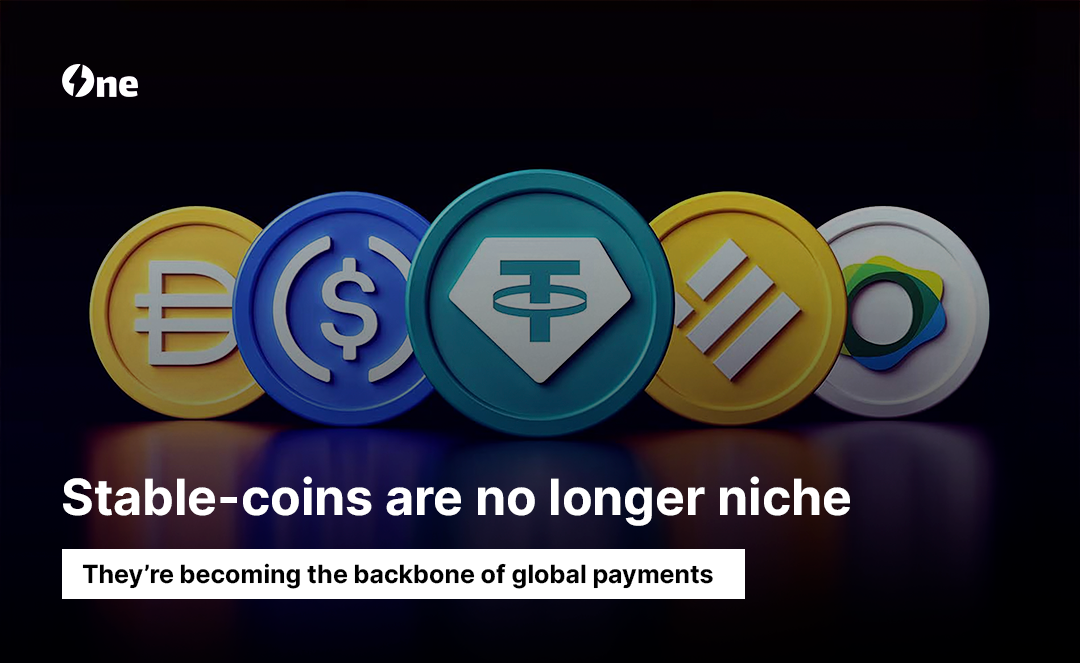
  • Stabelcoins are no longer niche: They’re becoming the backbone of global payments

    Stabelcoins are no longer niche: They’re becoming the backbone of global payments

    If you’ve been watching the payments industry lately you’ve seen a quiet revolution happening: stablecoins, digital tokens pegged to fiat currencies like the U.S. dollar, are inching toward the core of global payments infrastructure. Recent reports show they’re doing more than mere experimentation, they’re starting to challenge the rails that businesses, merchants and treasuries rely on every day. If you lead payments, treasury or innovation for a fintech or enterprise, now is the time to act. Because when rails change, your business payments must evolve too.

    What the data shows

    Several recent research reports underscore the scale of what’s happening:

    • A McKinsey article describes how tokenized cash and stablecoins are enabling next-gen payments with global reach, cross-border speed and cost-efficiency.
    • A Forbes report states that stablecoins processed around $9 trillion in payments in 2025, an 87% jump from the year before.
    • An IMF analysis points to stablecoins’ potential to reshape how value flows across borders, especially where banking infrastructure is weak or costly.

    In short, stablecoins are not just a niche within crypto, they’re becoming a strategic infrastructure for payment flows.

    What this means for payment infrastructure

    With this shift underway, businesses must rethink how their payment rails are built. Consider these three areas:

    1. Cost, speed and global reach
      Traditional cross-border payments still face delays, high fees and currency conversion issues. Stablecoins promise near-real-time settlement, lower costs, and 24/7 global availability.
    2. Tokenized rails must integrate with business operations
      It’s not enough to “accept crypto payments” as a separate channel. Payment systems must embed token rails into merchant flows, treasury operations, supplier payments and settlement logic. Without that integration, you risk creating a siloed offering that underperforms when scale or complexity hits.
    3. Governance, compliance and infrastructure maturity matter
      With stablecoins moving toward mainstream use, enterprise expectations shift. Businesses must build token-rails that are resilient, auditable, compliant and operational in real time. Infrastructure readiness is a differentiator.

    Why enterprises must act now

    The competitive pressure is mounting as legacy payment rails are being challenged, and platforms built without future-ready token capabilities risk being left behind. Businesses that embed token rails, stablecoin swap modules and cost-efficient rails now will gain first-mover advantage. Those that delay may face higher integration costs, slower time-to-value and reputational risk.

    How AIO helps

    At AIO we’ve built payment rail infrastructure with enterprise-grade capabilities:

    • Stablecoin swap
      Seamlessly convert between token types or fiat-equivalent value so your business stays agile.
    • Low-fee, fast-settlement token rails
      When volume scales or cross-border flows increase, you benefit from rails that minimise cost and latency.
    • Business-payments integration
      Token rails embedded into your merchant services, treasury flows and operational stack so you’re not running a token-pilot, you’re executing payments at scale.
    • Governance & compliance readiness
      Built-in audit-trail, fallback logic and enterprise controls ensure your token payments infrastructure meets both business and regulatory demands.

    Strategic Checklist for Decision-Makers

    • Audit your current payment-rail architecture: Can it handle high-volume, low-fee, token-based settlement?
    • Map your cross-border cost and latency: How much could you save by migrating some flows to token-rails?
    • Ensure token-rails are embedded, not optional: Are merchant services, treasury and payments fully integrated?
    • Build governance & fallback logic: If token rails hit stress, do you have safe switching and visibility?
    • Partner with infrastructure built for enterprise token-payments: Choose a provider with scale, integration and business focus.

    Conclusion 

    Stablecoins are starting to become the backbone of global payments. For enterprises in fintech, blockchain and payments, this is your moment to upgrade infrastructure, embed token-rails and optimize for speed, cost and global reach. 

    If you’re ready to build payment systems for the token-rail stablecoin era, let’s talk.

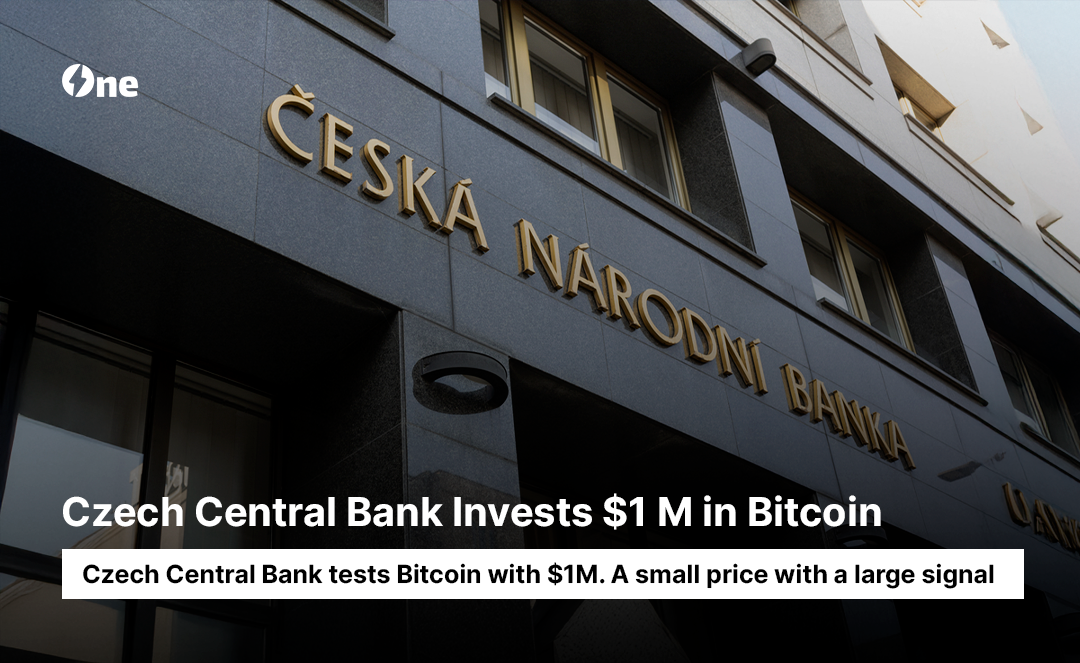
  • Czech Central Bank Invests $1 M in Bitcoin: A small price with a large signal

    Czech Central Bank Invests $1 M in Bitcoin: A small price with a large signal

    The Czech National Bank recently announced it had purchased approximately US$1 million of Bitcoin along with stablecoins and a tokenized deposit as part of an experimental portfolio held outside its core reserves. While the CNB emphasized this is not a formal shift toward Bitcoin-backed reserves, it does mark the first confirmed case of a western central bank acquiring Bitcoin for hands-on experience. For enterprise payment teams, this moment is an indication that central banks are stepping into crypto and digital-asset terrain, and that payment-rail infrastructure must mature accordingly.

    Why this matters for enterprises

    • Signal of institutional readiness
      Even if the investment is experimental, it shows that monetary authorities are preparing for a future where digital assets, tokenized deposits and crypto-rails may play a role. This means enterprises offering crypto payment solutions, stablecoin swaps or token-merchant services must prepare not just for pilots but for scale.
    • Operational complexity ahead
      The CNB said the purpose of its portfolio is to test the full lifecycle: key-management, multi-level approvals, crisis scenarios, AML/compliance oversight.  Enterprises building token-payment rails must mirror these processes as real payment services cannot be built on ad-hoc or lightly regulated token tools.
    • Payment-rail design must anticipate central-bank actions
      When a central bank tests tokenized assets and digital-native flows, that can cascade into expectations on settlement, transparency, cost-efficiency and regulatory compliance for all participants in the payments ecosystem.

    What your business needs now

    • Resilient token-rails
      Token infrastructure must support both innovation and operational reliability. Experimental portfolios by central banks show the need for rails that can handle changing composition, crypto volatility and regulatory demands.
    • Stablecoin and hybrid rails
      Because central banks are engaging with both Bitcoin and stablecoins in their test portfolio, enterprises should build token frameworks that are not reliant on one asset type alone. Multi-rail (stablecoins + tokenized assets + fiat-bridges) bring flexibility.
    • Compliance & governance baked-in
      As the CNB emphasized, full process control is a key objective. For payments companies, this means audit-trail, approval workflows, and transparent token-flows as parts of its core design.
    • Business-payments integration
      Token payments must be embedded into merchant services, treasury operations and global payment flows and must behave like business rails.

    How AIO helps enterprise payments teams act

    • AIO’s platform supports stablecoin swap modules, allowing enterprises to convert between token types and settle in stable or fiat-equivalent value when needed which aligns with test portfolios like the CNB’s.
    • Our token payment rails are designed for fast settlement, low fee-structures, and integration into business workflows while enabling merchant services and global payments to operate at scale.
    • We embed governance & compliance controls into the token payment stack so enterprises can meet audit, key-management and regulatory-readiness demands that central-bank test programs highlight.
    • We help firms integrate token infrastructure into treasury workflows, merchant payments and global settlement flows, turning token payments from side-projects into core payment systems.

    Action checklist for decision-makers

    1. Review your token-payment architecture: Does it support multiple asset types (Bitcoin, stablecoins, tokenized deposits) and can it adapt if a central bank or regulator changes its stance?
    2. Map the process and governance around your token rails: Are key management, approval workflows, audit trail, and crisis scenarios covered?
    3. Assess cost and settlement flexibility: When settlement demands grow or token composition changes, can your system still operate cost-efficiently and reliably?
    4. Embed token payments into your business payments stack: Merchant services, treasury, global settlement. Token rails should integrate rather than sit in a sandbox.
    5. Choose infrastructure partners with enterprise-grade credentials: You need token rails built for business, not just speculative use cases. AIO is built exactly for this.

    Conclusion

    The Czech National Bank’s move may be small in dollar terms, but it is large in signal value. It tells us that central banks are beginning to explore digital asset rails and tokenized payment models with an eye toward future-ready infrastructure. For enterprise payment teams, the takeaway is clear: token payments cannot stay in the pilot lane. They must be built for scale, reliability and integration. 

    If you’re preparing your payments architecture for the next phase of token payments and business integration, let’s talk.

  • Tokenization demand is no longer tied to Bitcoin: Tokenisation no longer moves in Bitcoin’s shadow

    Tokenization demand is no longer tied to Bitcoin: Tokenisation no longer moves in Bitcoin’s shadow

    Institutional interest in asset tokenization is evolving in a meaningful way. According to Galaxy Digital’s head of tokenization, Thomas Cowan, tokenization demand is no longer closely tied to the price of Bitcoin as tokenized assets and payment rails are standing on their own strategic foundations. 

    This shift matters for business leaders at payments platforms, fintech firms and treasury operations. What it highlights is that the stablecoin layer and token-enabled payment/settlement infrastructure are rising from the shadow of crypto speculation into enterprise-grade utility.

    What’s changed: Data and insights

    • Cowan states: “We’re getting to the point where it’s almost independent of the price of Bitcoin, that people see the benefits that blockchain can have to move and store traditional financial assets.”
    • A recent industry report finds that institutional tokenization has moved from exploratory to actionable, with stronger institutional demand, regulatory engagement, and enterprise readiness.
    • Tokenization is no longer just about digital currencies; it is increasingly about real world assets (RWAs), e.g., bonds, real estate, funds, etc., represented on-chain and settled via programmable rails.

    Why stablecoins and payments rails benefit

    For payments platforms and enterprise finance teams, this decoupling brings several strategic benefits:

    • Predictable settlement rails
      Stablecoins offer less volatility than cryptocurrencies like Bitcoin, enabling use cases such as treasury transfers, cross-border payouts, embedded payroll or vendor settlement.
    • Tokenized asset synergy
      Tokenized real world assets (RWAs) complement stablecoins by providing yield-bearing or collateralized flows that link into payment rails. As tokenization gains traction independent of crypto cycles, stablecoin usage becomes more fundamental.
    • Efficiency & programmability
      On-chain assets and stablecoin rails allow for automation (smart contracts), 24/7 global settlement, fractional ownership and lower cost structures. This shifts payments from “just moving money” to “programmable money”.
    • Enterprise readiness
      Since interest in tokenization is less speculative and more utility driven, firms can justify investment in compliant payment rails, stablecoin settlement and infrastructure built for scale rather than crypto hype.

    How AIO addresses this evolving landscape

    At AIO, we recognize that the strategic centre of payments is shifting. Here’s how we help businesses capitalize:

    • We support stablecoin settlement rails that integrate directly into business payments, treasury flows and cross-border transfers, reducing exposure to volatility and enabling predictable liquidity.
    • We provide token-agnostic rails which enable clients to embed tokenized asset flows and stablecoin settlement in a unified architecture, giving flexibility to adopt new asset types as tokenization accelerates.
    • We build with enterprise governance, auditability and regulatory readiness in mind. As tokenization becomes independent of crypto cycles, infrastructure must align with standards for custody, settlement, transparency and risk management.
    • We help companies transition from “crypto speculation infrastructure” to “business payments infrastructure,” focusing on utility, scalability and alignment with institutional adoption rather than market swings.

    Looking forward: What decision-makers should consider

    • Audit your payment rails
      Do your rails support stablecoin settlement with institutional-grade controls? Can you easily integrate tokenized-asset flows?
    • Separate speculation from utility
      Build your payments roadmap assuming tokenization and stablecoin usage will grow even if Bitcoin and crypto markets aren’t booming.
    • Plan for modularity
      Tokenization momentum means asset types will expand; your infrastructure should support switching or adding token types without major rebuilds.
    • Prepare for enterprise adoption
      As institutional players embrace tokenized assets and stablecoin rails, your ecosystem should be ready with compliance, settlement visibility and performance metrics that matter to treasury teams.

    Conclusion

    The decoupling of tokenization demand from Bitcoin’s price is a watershed moment for payments infrastructure. It signals that the market is maturing, not just chasing crypto price swings, but building rails for real world financial flows using stablecoins and tokenized assets. 

    For payments and fintech executives the question isn’t “if” but “how fast and how well” they can adopt these rails. At AIO, we stand ready to help businesses turn this transition into strategic advantage.

  • UK Stablecoin Regulation Rewired: What the Bank of England’s latest framework means for payment platforms

    UK Stablecoin Regulation Rewired: What the Bank of England’s latest framework means for payment platforms

    The Bank of England (BoE) has taken a decisive step in its regulatory evolution for stablecoins, releasing new proposals and issuing warnings that diluting rules further may jeopardise financial stability. This is more than a regulatory tweak, this is a new inflection point for payments and embedded finance platforms. For C-suite leaders, the rise of tokenised rails and stablecoin payments means infrastructure must now explicitly align with governance-ready frameworks.

    What’s changing: Key data & mandates

    • The BoE’s new regime proposes that issuers of “systemic” stablecoins hold at least 40 % of their backing assets directly with the Bank of England (unremunerated) and may hold up to 60% in short-term UK government debt. Previously the proposal required 100 % direct central bank backing.
    • The Bank introduced temporary caps on holdings: £20,000 per individual and £10 million per company for these stablecoins, a measure not seen in other major jurisdictions.
    • The proposal distinguishes oversight: systemically-important stablecoins will fall under the BoE; other stablecoins (used in crypto trading or non-payment flows) will be overseen by the Financial Conduct Authority (FCA).
    • The BoE emphasises that the UK’s banking-heavy credit model where around 85% of consumer credit is bank-funded. This means the risks of stablecoin adoption differ from jurisdictions like the U.S.

    Why it matters for payments and finance executives

    • Compliance-by-design is now non-optional. With backing and cap mandates, payment platforms using stable-coins or facilitating tokenised payments must ensure their rails can segregate funds, demonstrate holding-compliance, and service audit & regulatory demand.
    • Infrastructure investment timeline compresses. These regulatory shifts mean the window to embed tokenised rails and stable-coin settlement without retrofitting compliance frameworks is narrowing. Firms who wait face higher cost and risk.
    • Risk of competitive disadvantage. The caps introduced may limit usage volumes of sterling-denominated stablecoins in UK markets. Platforms that cannot structure around them may lose share to regional or offshore competitors.
    • Clarification on use-cases. The regulatory regime draws a line between stablecoins used for payments and those used for crypto trading. Platforms must evaluate which category their service falls into and ensure they comply with the correct regulator.
    • Opportunity in modular rails. As backing restrictions and liquidity obligations rise, platforms that build token-agnostic, modular and audit-ready rails gain strategic advantage. Payment-platforms now compete on compliance strength as much as velocity.

    How AIO addresses the challenge

    At AIO, we’ve aligned our product strategy and engineering roadmap with the emerging UK stablecoin regime:

    • Our rails support dynamic governance workflows like audit trails and smart contract triggers, so platforms can scale with confidence under evolving regulation.
    • We facilitate token-agnostic settlement as our architecture enables rapid integration and adapts as UK, EU or U.S. regimes mature.
    • We offer consultative regulatory readiness support, guiding enterprise clients through regime-mapping, cap-strategies and issuer oversight alignment.

    What next for boards, payments leads, CFOs

    • Monitor the BoE consultation: The industry feedback window runs until early 2026; final rules are expected later in the year.
    • Audit your stablecoin exposures: Which digital assets do you support? Who issues them? Are your holdings or client exposures subject to these new caps or oversight?
    • Refresh business-model assumptions: Tokenised payments, embedded finance, stablecoin issuance. Revisit your model under constraints of backing-asset composition and holding-limits.
    • Partner with tech platforms built for regulatory agility. As rules evolve, flexibility wins. Lock-in on legacy rails may cost you compliance risk and competitive pace.

    Conclusion

    The Bank of England’s revised stablecoin regime signals a shift as the focus is moving from whether stablecoins will play in payments, to how they will play under regulated infrastructure. For payments platform leaders the question is no longer just “should we support stablecoins”, but “can our infrastructure support them under the coming regime”.

    Platforms that marry settlement speed with governance readiness will seize the moment. At AIO, we are ready to help you turn this regulatory shift into strategic opportunity.

  • Mastercard to go crypto: What it means for the crypto payments industry

    Mastercard to go crypto: What it means for the crypto payments industry

    Introduction

    The open secret that Mastercard is planning to invest roughly $2 billion in tokenisation and stablecoin infrastructure is more than a headline, it is a wake up call for any business building and adopting token payments, merchant services or treasury rails. When a major payment network steps into crypto infrastructure, enterprises should ask: Are our token rails ready for the new standard?

    What the investment signals

    • According to recent coverage, Mastercard is in “advanced talks” to acquire ZeroHash, a regulated “crypto-settlement” infrastructure provider with licences and stablecoin rails.
    • ZeroHash recently secured a MiCA licence in the EU, giving it regulatory footing across more than 30 countries.
    • The move signals a shift: legacy payments networks are recognising that crypto payments and tokenised rails aren’t optional experiments but strategic infrastructure.

    Implications for enterprise token payment infrastructure

    When a payments giant invests in tokenisation, enterprises building token rails should take note:

    • Token-rails become baseline-expectation: If payment networks incorporate stablecoins and on-chain settlement, your merchant services or treasury rails must match or outperform them.
    • Compliance and scalability matter: ZeroHash’s licences and institutional use cases show that token payments are moving out of pilot stage and into full scale business operations.
    • Cost & settlement pressure: Enterprises offering “accept crypto payments” must build rails that support global settlement, stablecoins and reduced friction in all currencies and jurisdictions.

    How AIO helps you act now for the future

    • Stablecoin swap modules: Your business can shift seamlessly between token rails and stable settlement, reducing exposure when market or infrastructure risk increases.
    • Fast, low-fee token rails: We build cost-efficient rails for your merchant or treasury flows, supporting new standards emerging from payment network investments.
    • Business integration first: Token payments aren’t separate side projects. At AIO, we embed token rails into core business payments, merchant services and treasury operations, aligning with the strategic shift in payment infrastructure.

    Strategic checklist for payment & treasury leaders

    1. Review your current token rails: Can they match the scalability, licensing and settlement model now being adopted by major payment networks?
    2. Map your global payment flow cost: Are you ready for token rails that can settle in stablecoins, across multiple jurisdictions, with minimal friction?
    3. Confirm compliance-ready modules: Token payments will require regulated rails just like fiat payments did.
    4. Choose the right infrastructure partner: With the payments standard shifting, you need partners who support token payments, stablecoins, business-scale settlement. AIO is built for that.

    Conclusion

    When Mastercard moves into crypto tokenisation infrastructure, that’s not just crypto news, it’s payments industry news. Enterprises building and adopting token payments, merchant services or treasury flows should treat this moment as a benchmark. 

    With AIO, your business can have a tokenised-payment infrastructure that’s ready for the next phase of payments evolution. Contact us to explore how we help align your crypto payment rails with this new standard.

  • Who is Michael Selig? CFTC regulator shift could unlock enterprise token rails & stablecoin payments

    Who is Michael Selig? CFTC regulator shift could unlock enterprise token rails & stablecoin payments

    Introduction

    Trump administration named Michael Selig as its nominee to lead the Commodity Futures Trading Commission (CFTC) on 24 October 2025. This move comes at a critical moment for digital-asset payments, tokenisation and enterprise crypto-rails. For firms building merchant services, stablecoin rails or tokenised payments infrastructure, this regulatory shift presents both opportunity and urgency.

    Why the Selig nomination matters

    Selig has previously served as chief counsel on the SEC’s crypto task force and has prior experience at the CFTC.  His appointment signals a regulatory regime that may favour clearer frameworks for crypto payments, tokenised assets and enterprise adoption.

    Key take-aways:

    • The crypto market (now valued in trillions) stands to gain from regulatory clarity.
    • Enterprises that rely on crypto payment rails must interpret this as more than policy noise. It’s infrastructure relevance.
    • The nomination raises the stakes for firms offering stable-coin swaps, cross-border token payments and low-gas-fee rails.

    Implications for enterprise crypto payments & token rails

    With regulatory tailwinds potentially shifting, enterprises need to evaluate their crypto-payments infrastructure now:

    • Faster payments / stable-coin liquidity: As enterprise treasuries and merchant services look to embed token rails, reduced friction becomes crucial.
    • Gas-fee savings & scalable settlement: When token volumes rise, enterprise solutions must minimise transaction cost (up to 90 % savings compared with inefficient rails) and support high-throughput.
    • Token-rails embedded into core business payments: The new regime suggests a future where tokenised payments are not niche but integral to operations.

    How AIO helps enterprises act now

    AIO’s platform is designed for the enterprise-grade crypto-payments moment:

    • Stablecoin swaps enable firms to convert and settle instantly, reducing exposure and cost.
    • Fast-settlement token rails ensure merchants and treasuries can move liquidity globally, with gas costs minimised.
    • Built-in governance and compliance prepare you for the regulatory regime likely to follow Selig’s confirmation.

    Strategic checklist for decision-makers

    1. Audit your current payment rails: Are you ready for token-rail architecture?
    2. Map gas and transaction-cost exposure: Could savings of up to 90 % translate into real ROI?
    3. Evaluate token-merchant-services readiness: Do you have merchant integration, stable-coin swap, settlement workflows?
    4. Confirm compliance-ready infrastructure: Regulatory clarity is coming. Be ahead, not catching up.
    5. Select partner-platforms with enterprise credentials: Tokenisation, low-fee rails, scalable infrastructure. AIO is designed for this.

    Conclusion

    The nomination of Michael Selig to head the CFTC marks a pivotal moment for crypto-payments and token-rails in enterprise finance. Firms that act now to embed stable-coin swap systems, high-throughput token settlement, and gas-fee efficient payment rails will be positioned for the next phase of digital-asset adoption. 

    Reach out to AIO to discuss how your organisation can be ready for the incoming regulatory changes.

  • Smart Property Transactions: How Blockchain Payments Are Streamlining Real Estate Deals

    Smart Property Transactions: How Blockchain Payments Are Streamlining Real Estate Deals

    Real estate has always been a high-value, slow-moving industry where paperwork, intermediaries, and banking processes often turn a deal into a multi-week ordeal.

    In 2025, that’s changing.

    Thanks to blockchain payment technology, property transactions that once took days or weeks to settle can now be completed in minutes.

    For developers, brokers, and cross-border investors, this isn’t just a technological upgrade, it’s a financial and operational breakthrough.


    1. The Real Estate Bottleneck: Time, Fees, and Friction

    Traditional property payments face three persistent pain points:

    1. Slow Settlement Cycles: Bank wires take 3-7 business days, especially for international transfers.
    2. High Transaction Costs: Currency conversion, SWIFT, and intermediary fees can reach 2-4% per deal.
    3. Operational Complexity: Legal, escrow, and payment confirmations require multiple intermediaries.

    For cross-border deals, the inefficiency compounds especially when financing or international investors are involved.

    That’s where blockchain-powered payments are stepping in to change the rules.

    2. The Blockchain Advantage in Real Estate

    Blockchain enables direct, peer-to-peer transactions between buyers, sellers, and intermediaries without banks or clearing delays.

    Key Benefits:

    • Instant Settlements: Funds can move across borders in seconds, not days.
    • Minimal Fees: Average transaction costs drop from 2-4% to 0.3-0.5%.
    • Immutable Records: Payment proofs are timestamped on-chain for full auditability.
    • No FX Delays: Stablecoin payments (like USDT or USDC) eliminate currency conversion risk.

    For real estate developers managing multiple units or international projects, this means faster cash cycles and stronger liquidity.

    The AIO platform allows developers to accept and settle stablecoin payments globally, securely, instantly, and without third-party delays.

    3. Cross-Border Property Deals Made Simple

    Buying property across borders is traditionally a bureaucratic marathon.

    Banking systems require extensive documentation, long settlement windows, and limited currency options.

    Blockchain payments, however, remove nearly all of that friction.

    Example Scenario:

    • A Dubai developer sells a $400,000 apartment to a client in Singapore.
    • Traditional method: 5 business days for SWIFT clearance + $8,000 in combined fees.
    • Blockchain method: 60-second stablecoin transaction at $1,200 total cost.

    That’s a 7x cost reduction and a settlement speedup from days to minutes.

    4. Tokenized Real Estate: The Next Evolution

    Beyond payments, blockchain is enabling fractional property ownership through tokenization.

    Developers can issue blockchain tokens representing shares of real assets, letting investors buy, sell, or trade property stakes digitally, similar to equities.

    Why It Matters

    • Opens global property markets to smaller investors
    • Improves liquidity for traditionally illiquid assets
    • Automates revenue distribution (rental yield or profit share) via smart contracts

    By combining tokenized assets with blockchain payments, real estate becomes a fully digital investment class.

    5. Real Estate Platforms Adopting Blockchain Payments

    The world’s most forward-looking real estate ecosystems are already integrating blockchain rails:

    • Propy (US): Closed its first blockchain home sale in 2024 using stablecoin payments.
    • PropertyCoin (EU): Tokenized over €100M worth of commercial property.
    • Asia-Pacific Developers: Using USDT settlements to attract overseas buyers and simplify closing processes.

    With AIO’s multi-chain architecture, developers can integrate blockchain payments directly into property listing sites or CRM systems, enabling instant, borderless transactions.

    6. Instant Escrow and Smart Contract Settlements

    One of blockchain’s most powerful features in real estate is automated escrow.

    Smart contracts can hold funds until legal or contractual conditions are met then releasing them automatically once verified.

    This removes reliance on third-party escrow agents, reducing cost and risk.

    It also speeds up title transfers and closing by synchronizing payment and contract execution in real time.

    7. Simplified Integration for Developers and Agents

    You don’t need a blockchain engineer to start.

    AIO provides:

    • Simple API and plugin-based integration for property listing or CRM platforms
    • Instant payment tracking via dashboard analytics
    • Support for multiple stablecoins (USDT, USDC, EUROC, and others)

    From real estate agents to enterprise developers, the process is designed to be plug-and-play.

    8. The Executive Takeaway

    In an industry where trust and timing define success, blockchain payments are becoming a decisive edge.

    Faster settlements, lower fees, and global accessibility are rewriting how developers, agents, and investors move money in real estate.

    Property transactions no longer need to wait for banks.

    Discover how AIO helps real estate professionals close deals faster across borders, currencies, and time zones. Let us help you grow your business.