Tag: Industry News

  • Kevin Hassett at the Fed: What a pro-crypto chair could mean for digital payments

    Kevin Hassett at the Fed: What a pro-crypto chair could mean for digital payments

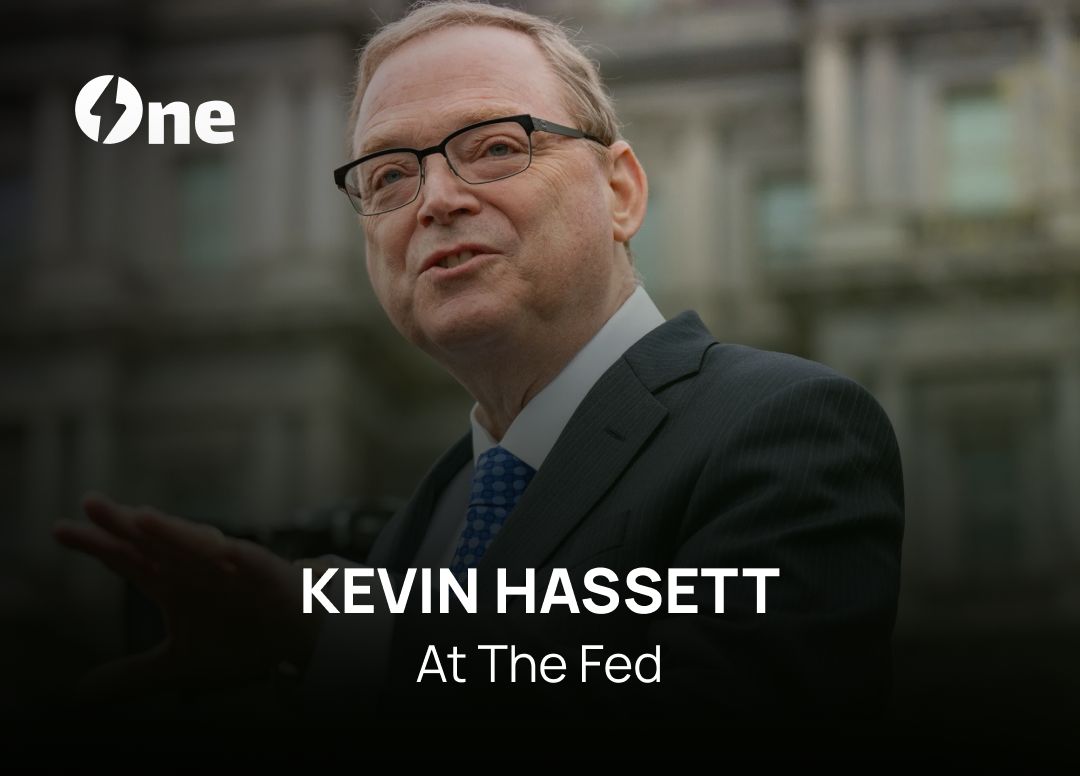
    Donald Trump’s longtime economic adviser, Kevin Hassett, is now the leading candidate to replace Jerome Powell as Fed Chair when his term ends in 2026. What happens at the Federal Reserve matters for every asset class and increasingly for crypto. 

    Given Hassett’s public support for quicker rate cuts and a recognized pro-crypto stance (including involvement in the White House digital-asset working group), his potential appointment could shift US monetary policy with ripple effects across cryptocurrencies, stablecoins, and digital payments infrastructure. 

    For fintechs, payment providers, and enterprises building crypto rails, this possible shift underscores a broader point: institutional clarity and macro-tailwinds may finally converge. 


    Why Hassett’s nomination matters for crypto & payments

    1. Rate cuts could revive risk-asset inflows

    Hassett is known for advocating aggressive interest-rate cuts. Markets are already reacting: futures imply a high chance of another rate reduction soon. Lower rates tend to increase liquidity and risk-asset appetite, a positive signal for crypto investments, trading activity, and stablecoin usage.

    2. A potentially weaker dollar may boost crypto as alternative assets

    Analysts warn that under a dovish Fed stance, the U.S. dollar could weaken, which often makes non-dollar assets like crypto more attractive to global buyers. For crypto payments and global settlement rails, that could mean increased demand and transaction volume, especially from international users.

    3. Regulatory outlook may turn more favourable for digital assets

    Hassett’s crypto-friendly credentials, including his role overseeing the White House digital-asset working group, raise hopes among industry participants that stablecoins and token rails might receive clearer regulatory treatment. That kind of clarity can unlock institutional adoption and wider enterprise-grade crypto payments integration.

    4. Potential for faster adoption of token rails and stablecoin infrastructure

    As monetary conditions loosen and risk-asset sentiment improves, the business case for tokenised payment infrastructure gets stronger. This could accelerate demand for rails that support stablecoin swaps, low-fee global settlement, and cross-border transfers, use cases that are core to AIO’s offering.


    What it means: Risks and opportunities

    ✅ Potential Upsides⚠️ Risks & Unknowns
    Renewed investor liquidity into crypto & stablecoinsUncertainty while the new Fed leadership and policy direction is finalized
    Stronger demand for crypto-payments & global settlement railsPolicy/regulation remains unpredictable especially around stable-coins and CBDCs
    Lower interest rates may increase spending and transaction volume, good for payment railsVolatility in asset prices and interest rates could pressure stable-coin valuation and liquidity pools
    Institutional and enterprise adoption may accelerate with clearer regulatory signalsCrypto market cycles remain unpredictable; regulation in US or abroad may still tighten


    How AIO helps firms navigate & capitalize

    As the macroeconomic and regulatory landscape shifts, bolstered by developments at the Fed, AIO provides infrastructure built for the new era:

    • Token payment rails ready for growth
      AIO’s rails are designed to handle surging volume, global transfers, and stablecoin flows in any rate environment.
    • Stablecoin swap capability
      When volatility spikes or macro conditions shift, AIO enables quick asset conversion to reduce exposure while maintaining payment fluidity.
    • Low-fee, high-throughput infrastructure
      Allows firms to scale global payments without prohibitive cost, making crypto rails competitive with legacy systems.
    • Compliance and governance readiness
      As regulatory attitudes evolve, AIO supports audit-trail, reserve standards, and compliance frameworks, which are critical for enterprise adoption.

    In short: whether markets rally or wobble, whether regulations ease or tighten, firms using AIO are positioned to adapt faster and weather turbulence better.


    Strategic takeaways for decision makers

    1. Assess your payment-rail readiness: If not yet token-rail capable, now is the time to build or partner.
    2. Plan for volatility & liquidity cycles: Embed swap, hedging, fallback rails in your architecture.
    3. Push for regulatory-compliant rails: Structured rails with compliance and governance will attract institutional clients faster.
    4. Leverage global settlement potential: With potential dollar weakness, cross-border crypto rails offer arbitrage and new market reach.
    5. Position for long-term adaptability: Cryptos, stablecoins, CBDCs, tokenised assets, rails built today should support all.


    Conclusion & next steps

    The rising odds that Kevin Hassett could become the next Federal Reserve Chair is more than a political headline, it may reshape macro conditions, U.S. monetary policy, and the environment for digital asset payments globally. A dovish Fed stance under his leadership could mean lower interest rates, a softer dollar, more liquidity, and renewed appetite for risk assets like crypto, all factors that tend to favor stablecoins, token rails, and cross-border digital payments. 

    For fintechs, merchants, treasuries and enterprises building or planning crypto-payments infrastructure, this moment is a strategic inflection point. The firms that prepare now, building rails that support stable-coin swaps, low-cost global settlement, compliance-ready flows and scalable infrastructure, will be best positioned to benefit from renewed crypto demand, regulatory clarity, and macro tailwinds.

    At AIO, we’ve designed our platform precisely for such a future: stablecoin swap capability, high-throughput token rails, and enterprise-grade compliance and governance. If you want to ensure your payments stack is built for what comes next, whether volatility or growth, now is the time to act.

    Explore how AIO can help you build resilient, future-ready crypto payment infrastructure. Contact our team today to discuss your rails strategy, stablecoin integration, or global payment needs.
  • RAIN just doubled in a day: What it means for novice traders

    RAIN just doubled in a day: What it means for novice traders

    RAIN just doubled in a day. Here is what really happened, in simple English and with real numbers.

    You open your crypto app. On the Top Gainers list you see a coin called RAIN up around one hundred percent in twenty four hours.

    Most people would think, “I missed free money.”  Some people press buy without thinking.

    Let us understand what really happened so you learn something from it, even if you never touch RAIN.


    What is RAIN in simple words

    RAIN is the token of Rain Protocol.  

    When people say “protocol” in crypto, think of it like this:  

    It is an online app that runs mostly by code, not by people pressing buttons in a company. Users connect their wallet, use the app and pay small fees. The rules are written in smart contracts.

    Rain is a “prediction market” on the Arbitrum blockchain.

    Prediction market means:  

    • People create markets on real events  
    • Example
      •  “Will team A win the match?”  
      • “Will the price of an asset be above this level on a date?”
    • Traders buy “yes” or “no” shares  
    • The app takes a small fee from trading

    Some basic numbers right now:  

    • Price around 0.007 to 0.008 dollar per RAIN  
    • Market cap roughly 1.8 to 1.9 billion USD  
    • Circulating supply about 238 billion RAIN  
    • Twenty four hour trading volume around 110 to 120 million USD  
    • Price up about 100 percent in one day and more than 120 percent (120%) in one week

    From money and usage data:  

    • Fees in the last 30 days around 130,000 USD  
    • Protocol revenue (share that goes to holders) about 73,000 USD in 30 days  
    • All platform fees are used to buy back and burn RAIN, which slowly reduces supply  

    So you have a real product with real but still small revenue. The token value is huge compared to that revenue.


    What event caused the pump?

    Everything started from a small biotech company. Enlivex Therapeutics is a clinical stage biotech listed on Nasdaq. Recently it announced a big change.

    Here is what they said in simple language:  

    • They want to raise 212 million USD from investors  
    • They plan to use most of that money to buy RAIN tokens  
    • RAIN will be the main asset in their treasury  
    • They will still run their normal biotech business  
    • They added a big political name, Matteo Renzi, former prime minister of Italy, to their board  

    Now the important part is size and proportion:  

    • Before this news, Enlivex market cap was around 20 to 35 M USD  
    • The planned raise is 212 M USD  
    • So the raise is roughly 6 to 10 times bigger than the company itself  

    And most of that is planned for one small token. That is why traders got excited, a tiny altcoin suddenly became the center of a two hundred twelve million dollar story.


    What is a “digital asset treasury?”

    Treasury is the money a company keeps on its balance sheet.  

    Normally it sits in:  

    • Cash  
    • Bank deposits  
    • Short term safe bonds

    Digital asset treasury means:  

    • Company decides to hold part of that money in crypto  
    • That can be Bitcoin, Ethereum, or in this case RAIN

    This is not standard and it is very risky, especially when the chosen coin is a very small one like RAIN.  

    This is why the news created such a strong reaction.


    How big is this for RAIN in numbers?

    Let us do easy math using rough numbers:

    • Planned amount = 212 M USD  
    • RAIN price around 0.0075 USD per token  

    If all 212 M USD went into RAIN at this price, then:  

    • 212,000,000 / 0.0075 ≈ 28,000,000,000 RAIN  
    • Circulating supply ≈ 238,000,000,000 RAIN  

    So the company could theoretically buy around twelve percent of the circulating supply.

    Of course in real life:  

    • They may not raise full 212 M USD  
    • They may not put all of it into RAIN  
    • They will not buy everything at once

    But even the plan on paper is large compared to the token.

    Now look at the move:  

    • RAIN launched around 0.0026 to 0.0027 USD in September 2025  
    • It traded in that zone for a while  
    • On this news it spiked above 0.008 USD  
    • That is roughly 3x from early levels in a few months, and around 100 percent (100%) in a single day  

    You can now feel why early holders are very happy.


    What “exit liquidity” means here

    This is a term people throw around, so let us make it very clear.

    Exit liquidity” means the people who buy at high prices so earlier holders can sell and “exit” their position.

    Example  

    • You bought RAIN at 0.002 USD  
    • News comes, price jumps to 0.008 USD  
    • New traders see plus 100 percent (100%) and buy at 0.008 USD without a plan  
    • You sell to them at 0.008 USD

    They are your exit liquidity. You exited your trade, they held the bag.

    In this RAIN story, the possible groups are:  

    Beneficiaries  

    • Early RAIN holders who were in long before the news  
    • Enlivex if the plan works and its own stock trades higher on hype  
    • Rain Protocol team if attention brings more users and volume  
    • Traders who bought before the pump and lock in profit with a plan

    Possible exit liquidity  

    • People who only saw plus 100 percent (100%) on the screen and bought without knowing the story  
    • People who believe 212 M USD will instantly “moon” the price in a straight line  
    • High leverage traders who jumped in late and get liquidated on the first 20 to 30 percent (20-30%) dip

    This does not mean RAIN is fake. It means price can move much faster than real business growth, and someone always becomes the last buyer of the move.


    How strong are the fundamentals right now

    Take feelings out and look at the numbers.

    From data sites and on chain dashboards:  

    • Market cap around 1.8 to 1.9 billion USD  
    • Protocol revenue last 30 days ≈ 73,000 USD  
    • Fees last 30 days ≈ 130,000 USD  
    • TVL in the app roughly around 1 M USD 

    Here TVL means “Total Value Locked.”  

    • Simple meaning: it is the total amount of money that users have currently put into this app, for example inside markets, pools or contracts. It is one rough way to see how much real money is using the system.

    So right now RAIN is:

    • A young app  
    • With small but real income  
    • With a very large token value  
    • Now sitting on top of a big, risky corporate news story

    For a learner, this is the main lesson: hype and valuation can run far ahead of actual business numbers, especially for altcoins.


    What could happen next

    This is not a prediction, there are three simple paths this could lead to:

    Scenario one 
    The plan works and buying is real.

    • Enlivex closes the fundraise  
    • They actually buy RAIN over time  
    • This creates steady demand over many months  
    • Price does not have to explode again, but it can stay strong while this buying continues  

    Here the risk is that early holders use this liquidity to silently sell. So the price can be strong but choppy.

    Scenario two 
    The plan slows down or changes  

    • Raise takes longer, amount is smaller, or rules change  
    • Hype cools down  
    • Traders who came only for fast pump leave  
    • Price can retrace a big part of the move and return closer to old levels

    For late buyers this is painful. For people waiting with cash it can be an opportunity if they still believe in the long term story.

    Scenario three 
    Protocol grows into the story  

    • Prediction markets become more popular  
    • Rain grows volume, fees and TVL month after month  
    • More users come in because of the attention  
    • Over time, revenue and usage start to justify more of the valuation

    This is the healthiest version, but it takes years, not days. Most people will not have that patience.

    Reality is usually a mix. Some hype, some short term dump, some real growth, sometimes all of them together.


    What you should learn if you only know Bitcoin

    If you are just a normal Bitcoin holder and not a trader, here is the simple takeaway:

    • RAIN is a very small, very risky altcoin  
    • A small public company said it wants to raise a huge amount of money and buy that altcoin for its treasury  
    • This story pushed the price up around 100 percent in one day  
    • The real business behind RAIN is still small and early  
    • Altcoin news like this can create crazy charts, but also big downside once the hype cools

    So do not treat RAIN like Bitcoin. Bitcoin is a global asset with deep liquidity and a long history. RAIN is a niche token with a fresh story and heavy risk. Use this case as a learning example on how news, numbers and human emotion can mix together.


    Short summary

    • RAIN is a prediction market token that just doubled in a day  
    • The main trigger was a 212 M USD treasury plan from a small Nasdaq biotech that wants to buy a lot of RAIN and hold it  
    • In theory they could try to buy close to twelve percent (12%) of circulating supply at current prices  
    • Fundamentals are real but small, with about 73,000 USD revenue in 30 days and around 1 M USD TVL against a multi-billion dollar token value  
    • Early holders and disciplined traders can win, late and emotional buyers risk becoming exit liquidity  
    • This is a high risk story coin, not something you put in the same category as Bitcoin

    If you keep one habit from this story, make it this and always ask these questions:

    • What really happened  
    • How big is it in numbers  
    • Who benefits  
    • Who might be the exit  

    *The above article was for educational purposes and not financial advice

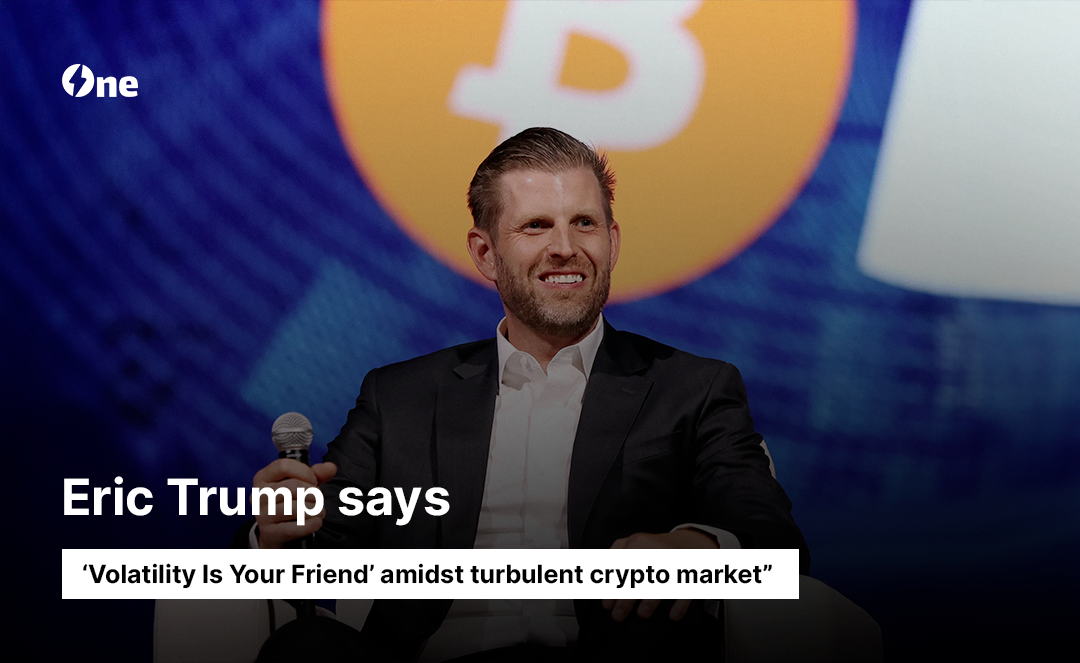
  • Eric Trump says ‘Volatility is your friend’ amidst turbulent crypto market

    Eric Trump says ‘Volatility is your friend’ amidst turbulent crypto market

    If you’ve been watching the headlines, you’ll see that Eric Trump recently said of Bitcoin, “Volatility is your friend.” His crypto firm is stacking thousands of bitcoins while others worry about crypto carnage. That kind of comment matters for enterprise payment, merchant and treasury teams. Because when the token world is saying volatility is good, business payments need rails that handle ups and downs, not just the rise.


    The Bigger Picture

    • Amid a slump in crypto markets, Eric Trump’s firm (American Bitcoin) added more than 3,000 BTC in a quarter, signaling confidence in accumulation rather than retreat.
    • Meanwhile, usage metrics for many tokens are under pressure, volumes shift, and market sentiment toggles fast.

      For payment architects this means you cannot design token payment rails assuming calm seas.


    Why this matters for crypto payments & business rails

    1. Payments must survive volatility

      If the token you rely on falls or bears strike, your payment flows must still work. Token settlement, merchant services, treasury flows, they all need fallback options and robust infrastructure.
    2. Settlement cost and speed matter more

      When volatility spikes, transaction cost, liquidity risk and rails latency may worsen. Payment services must build for cost control and rapid settlement across token rails.
    3. Token-payments must integrate into business operations

      It’s no longer enough to just offer crypto payments as an option.” The infrastructure must plug into merchant services, reconcile with treasury workflows and behave like business-grade rails. Because when volatility hits, you’ll want rails that work seamlessly.


    How AIO helps enterprises act now

    • AIO supports stablecoin swap modules so you can convert risky token exposures into stable settlement rails when needed.
    • Our token-payment rails are built for fast settlement and low cost, enabling merchants and business payments to operate under changing token market conditions.
    • Token rails are embedded into your business payments stack, merchant services, and treasury flows, so you don’t end up with a side-project when things matter.
    • We design for both high growth phases and stress phases. Because when the market says “volatility is your friend,” your payments must still work.


    Action steps for business leaders

    • Audit your payment architecture: Does it cover token rails, fallback rails, and settlement under volatility?
    • Review cost-risk: What happens if token cost or liquidity worsens? Do you have stable-coin or fiat fallback?
    • Embed token-rails into business operations: Are your merchant service flows and treasury flows connected to your token-payment rails?
    • Choose partners built for enterprise token-payments: Low cost, high integration, fallback capability. That’s what matters now.


    Conclusion

    When crypto firms talk about volatility as a feature instead of a bug, businesses must listen. Because in payments, you need infrastructure that works in the rally, in the slump, and everywhere in between. 

    If you’re ready to build payment rails that handle the full spectrum of token market behavior, let’s talk.

  • Mastercard to go crypto: What it means for the crypto payments industry

    Mastercard to go crypto: What it means for the crypto payments industry

    Introduction

    The open secret that Mastercard is planning to invest roughly $2 billion in tokenisation and stablecoin infrastructure is more than a headline, it is a wake up call for any business building and adopting token payments, merchant services or treasury rails. When a major payment network steps into crypto infrastructure, enterprises should ask: Are our token rails ready for the new standard?

    What the investment signals

    • According to recent coverage, Mastercard is in “advanced talks” to acquire ZeroHash, a regulated “crypto-settlement” infrastructure provider with licences and stablecoin rails.
    • ZeroHash recently secured a MiCA licence in the EU, giving it regulatory footing across more than 30 countries.
    • The move signals a shift: legacy payments networks are recognising that crypto payments and tokenised rails aren’t optional experiments but strategic infrastructure.

    Implications for enterprise token payment infrastructure

    When a payments giant invests in tokenisation, enterprises building token rails should take note:

    • Token-rails become baseline-expectation: If payment networks incorporate stablecoins and on-chain settlement, your merchant services or treasury rails must match or outperform them.
    • Compliance and scalability matter: ZeroHash’s licences and institutional use cases show that token payments are moving out of pilot stage and into full scale business operations.
    • Cost & settlement pressure: Enterprises offering “accept crypto payments” must build rails that support global settlement, stablecoins and reduced friction in all currencies and jurisdictions.

    How AIO helps you act now for the future

    • Stablecoin swap modules: Your business can shift seamlessly between token rails and stable settlement, reducing exposure when market or infrastructure risk increases.
    • Fast, low-fee token rails: We build cost-efficient rails for your merchant or treasury flows, supporting new standards emerging from payment network investments.
    • Business integration first: Token payments aren’t separate side projects. At AIO, we embed token rails into core business payments, merchant services and treasury operations, aligning with the strategic shift in payment infrastructure.

    Strategic checklist for payment & treasury leaders

    1. Review your current token rails: Can they match the scalability, licensing and settlement model now being adopted by major payment networks?
    2. Map your global payment flow cost: Are you ready for token rails that can settle in stablecoins, across multiple jurisdictions, with minimal friction?
    3. Confirm compliance-ready modules: Token payments will require regulated rails just like fiat payments did.
    4. Choose the right infrastructure partner: With the payments standard shifting, you need partners who support token payments, stablecoins, business-scale settlement. AIO is built for that.

    Conclusion

    When Mastercard moves into crypto tokenisation infrastructure, that’s not just crypto news, it’s payments industry news. Enterprises building and adopting token payments, merchant services or treasury flows should treat this moment as a benchmark. 

    With AIO, your business can have a tokenised-payment infrastructure that’s ready for the next phase of payments evolution. Contact us to explore how we help align your crypto payment rails with this new standard.

  • Solana’s breakout week: Enterprise payments should take notice

    Solana’s breakout week: Enterprise payments should take notice

    Introduction

    Solana just chalked up two big moments: its network processed about 70 million transactions a day and roughly $143 billion in DEX volume for October.  Meanwhile, U.S. spot Solana ETFs pulled in nearly $200 million during their very first week of trading.  For enterprises looking at token payments, stablecoin rails or merchant services, this isn’t just crypto news, it’s a signal to upgrade your payment architecture.

    What the Solana data means

    • Solana’s design allows for high throughput: 70 M+ daily transactions, $143 B monthly DEX volume. It outpaces many major chains on a pure throughput basis.
    • The new spot Solana ETFs show institutional appetite for regulated exposure to high-performing crypto networks, nearly $200 M inflows in the debut week.
    • Combined, throughput + capital flows point to a new tier of infrastructure readiness. Enterprises must ask: are our payment rails aligned with this new layer of performance?

    Implications for enterprise token payment infrastructure

    When your business depends on tokenised payments, high throughput and low friction become more than “nice to have.”

    • Settlement speed & cost: Heavy traffic on networks means you need efficient token rails, or your cost and latency will spike.
    • Merchant & treasury readiness: If you’re enabling merchants to accept crypto payments or integrating token rails into treasury flows, you need a stack that matches the network performance (like Solana) and bridges to business payments.
    • Stablecoin and fallback capability: Network advantages are good, but you still need a token payment infrastructure that supports business dimensions (stablecoin swaps, merchant services, treasury uses) and can fallback when volatility or congestion hits.

    How AIO helps you act now

    • Aside from AIO now accepting Solana, AIO also supports stablecoin swap modules, so your enterprise can move between volatile token rails and stable settlement rails seamlessly.
    • Our platform is built to deliver fast tokenised payment rails with major cost savings (gas-fee reductions, low settlement latency) and thus aligns with high-throughput environments like Solana’s.
    • We embed token-rails into core business payments, merchant services and treasury workflows. Meaning you’re not building a pilot, you’re extending business-grade infrastructure.
    • With the surge in institutional flows (ETFs) and network usage, you need infrastructure that’s enterprise-ready. AIO is positioned to help your business take that step.

    Strategic checklist for payment & treasury leaders

    1. Map your payment-rail architecture: Which networks are you using? Are they built for tens of millions of daily transactions?
    2. Evaluate cost structure: When throughput spikes, can you maintain low-fee settlements?
    3. Assess integration: Does your token-rail connect to merchant services, treasury systems and business-payments layers?
    4. Build stablecoin and fallback capabilities: If token rails get congested, do you have a fallback path or plan?
    5. Choose a partner-platform with enterprise credentials: High-throughput, low-cost rails + business integration + compliance. AIO checks all these boxes.

    Conclusion

    Solana’s breakout week is more than a headline, it’s a reminder that enterprise payment rails need to scale, integrate and perform. If your business is looking to embed tokenised payments, stablecoin rails or merchant services adapted for high-throughput networks, now’s the time to act. 

    Contact the AIO team to explore how we can help you upgrade your token payment infrastructure to the next level.