Tag: Bitcoin

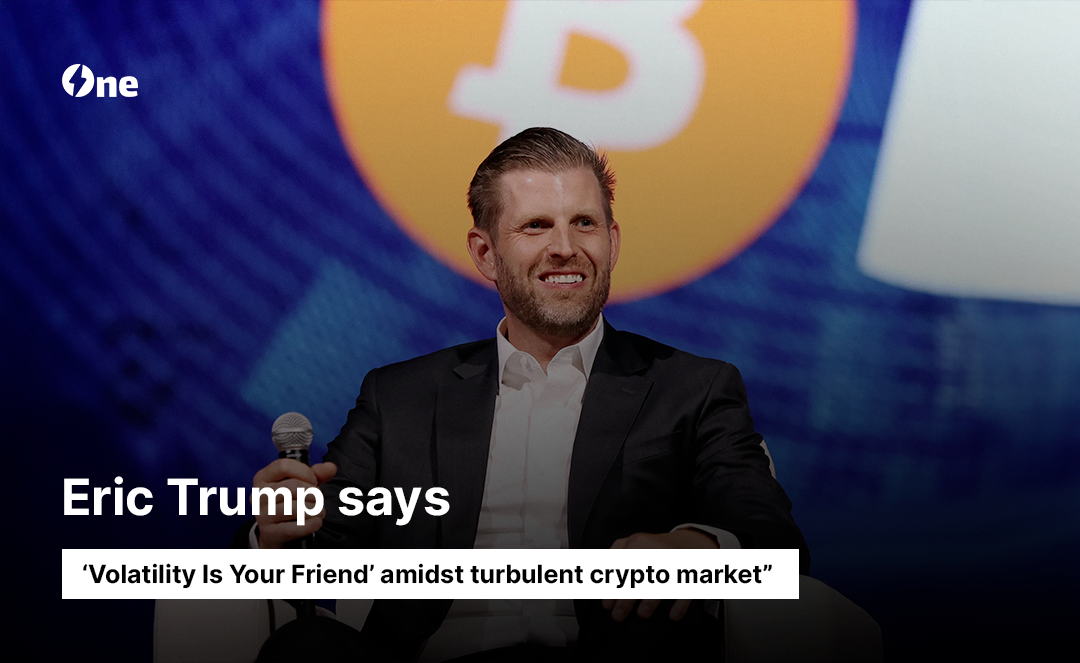
  • Eric Trump says ‘Volatility is your friend’ amidst turbulent crypto market

    Eric Trump says ‘Volatility is your friend’ amidst turbulent crypto market

    If you’ve been watching the headlines, you’ll see that Eric Trump recently said of Bitcoin, “Volatility is your friend.” His crypto firm is stacking thousands of bitcoins while others worry about crypto carnage. That kind of comment matters for enterprise payment, merchant and treasury teams. Because when the token world is saying volatility is good, business payments need rails that handle ups and downs, not just the rise.


    The Bigger Picture

    • Amid a slump in crypto markets, Eric Trump’s firm (American Bitcoin) added more than 3,000 BTC in a quarter, signaling confidence in accumulation rather than retreat.
    • Meanwhile, usage metrics for many tokens are under pressure, volumes shift, and market sentiment toggles fast.

      For payment architects this means you cannot design token payment rails assuming calm seas.


    Why this matters for crypto payments & business rails

    1. Payments must survive volatility

      If the token you rely on falls or bears strike, your payment flows must still work. Token settlement, merchant services, treasury flows, they all need fallback options and robust infrastructure.
    2. Settlement cost and speed matter more

      When volatility spikes, transaction cost, liquidity risk and rails latency may worsen. Payment services must build for cost control and rapid settlement across token rails.
    3. Token-payments must integrate into business operations

      It’s no longer enough to just offer crypto payments as an option.” The infrastructure must plug into merchant services, reconcile with treasury workflows and behave like business-grade rails. Because when volatility hits, you’ll want rails that work seamlessly.


    How AIO helps enterprises act now

    • AIO supports stablecoin swap modules so you can convert risky token exposures into stable settlement rails when needed.
    • Our token-payment rails are built for fast settlement and low cost, enabling merchants and business payments to operate under changing token market conditions.
    • Token rails are embedded into your business payments stack, merchant services, and treasury flows, so you don’t end up with a side-project when things matter.
    • We design for both high growth phases and stress phases. Because when the market says “volatility is your friend,” your payments must still work.


    Action steps for business leaders

    • Audit your payment architecture: Does it cover token rails, fallback rails, and settlement under volatility?
    • Review cost-risk: What happens if token cost or liquidity worsens? Do you have stable-coin or fiat fallback?
    • Embed token-rails into business operations: Are your merchant service flows and treasury flows connected to your token-payment rails?
    • Choose partners built for enterprise token-payments: Low cost, high integration, fallback capability. That’s what matters now.


    Conclusion

    When crypto firms talk about volatility as a feature instead of a bug, businesses must listen. Because in payments, you need infrastructure that works in the rally, in the slump, and everywhere in between. 

    If you’re ready to build payment rails that handle the full spectrum of token market behavior, let’s talk.
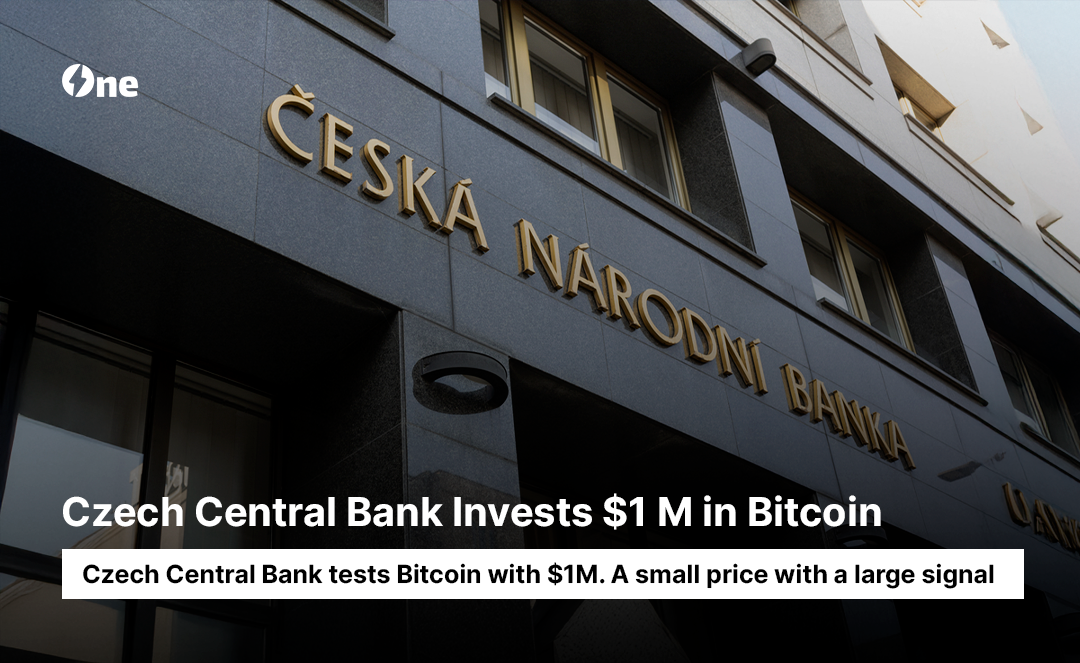
  • Czech Central Bank Invests $1 M in Bitcoin: A small price with a large signal

    Czech Central Bank Invests $1 M in Bitcoin: A small price with a large signal

    The Czech National Bank recently announced it had purchased approximately US$1 million of Bitcoin along with stablecoins and a tokenized deposit as part of an experimental portfolio held outside its core reserves. While the CNB emphasized this is not a formal shift toward Bitcoin-backed reserves, it does mark the first confirmed case of a western central bank acquiring Bitcoin for hands-on experience. For enterprise payment teams, this moment is an indication that central banks are stepping into crypto and digital-asset terrain, and that payment-rail infrastructure must mature accordingly.

    Why this matters for enterprises

    • Signal of institutional readiness
      Even if the investment is experimental, it shows that monetary authorities are preparing for a future where digital assets, tokenized deposits and crypto-rails may play a role. This means enterprises offering crypto payment solutions, stablecoin swaps or token-merchant services must prepare not just for pilots but for scale.
    • Operational complexity ahead
      The CNB said the purpose of its portfolio is to test the full lifecycle: key-management, multi-level approvals, crisis scenarios, AML/compliance oversight.  Enterprises building token-payment rails must mirror these processes as real payment services cannot be built on ad-hoc or lightly regulated token tools.
    • Payment-rail design must anticipate central-bank actions
      When a central bank tests tokenized assets and digital-native flows, that can cascade into expectations on settlement, transparency, cost-efficiency and regulatory compliance for all participants in the payments ecosystem.

    What your business needs now

    • Resilient token-rails
      Token infrastructure must support both innovation and operational reliability. Experimental portfolios by central banks show the need for rails that can handle changing composition, crypto volatility and regulatory demands.
    • Stablecoin and hybrid rails
      Because central banks are engaging with both Bitcoin and stablecoins in their test portfolio, enterprises should build token frameworks that are not reliant on one asset type alone. Multi-rail (stablecoins + tokenized assets + fiat-bridges) bring flexibility.
    • Compliance & governance baked-in
      As the CNB emphasized, full process control is a key objective. For payments companies, this means audit-trail, approval workflows, and transparent token-flows as parts of its core design.
    • Business-payments integration
      Token payments must be embedded into merchant services, treasury operations and global payment flows and must behave like business rails.

    How AIO helps enterprise payments teams act

    • AIO’s platform supports stablecoin swap modules, allowing enterprises to convert between token types and settle in stable or fiat-equivalent value when needed which aligns with test portfolios like the CNB’s.
    • Our token payment rails are designed for fast settlement, low fee-structures, and integration into business workflows while enabling merchant services and global payments to operate at scale.
    • We embed governance & compliance controls into the token payment stack so enterprises can meet audit, key-management and regulatory-readiness demands that central-bank test programs highlight.
    • We help firms integrate token infrastructure into treasury workflows, merchant payments and global settlement flows, turning token payments from side-projects into core payment systems.

    Action checklist for decision-makers

    1. Review your token-payment architecture: Does it support multiple asset types (Bitcoin, stablecoins, tokenized deposits) and can it adapt if a central bank or regulator changes its stance?
    2. Map the process and governance around your token rails: Are key management, approval workflows, audit trail, and crisis scenarios covered?
    3. Assess cost and settlement flexibility: When settlement demands grow or token composition changes, can your system still operate cost-efficiently and reliably?
    4. Embed token payments into your business payments stack: Merchant services, treasury, global settlement. Token rails should integrate rather than sit in a sandbox.
    5. Choose infrastructure partners with enterprise-grade credentials: You need token rails built for business, not just speculative use cases. AIO is built exactly for this.

    Conclusion

    The Czech National Bank’s move may be small in dollar terms, but it is large in signal value. It tells us that central banks are beginning to explore digital asset rails and tokenized payment models with an eye toward future-ready infrastructure. For enterprise payment teams, the takeaway is clear: token payments cannot stay in the pilot lane. They must be built for scale, reliability and integration. 

    If you’re preparing your payments architecture for the next phase of token payments and business integration, let’s talk.