Category: Industry News & Trends

  • Tokenization & Deposit Tokenization: The Next Wave of Digital Assets in Banking

    Tokenization & Deposit Tokenization: The Next Wave of Digital Assets in Banking

    The world’s largest financial institutions are no longer asking if blockchain will reshape money, they’re deciding how fast they can integrate it.

    In 2025, tokenization, the process of converting real-world assets into blockchain-based tokens, has become the centerpiece of global finance innovation.

    From JPMorgan’s Onyx network to the Reserve Bank of India’s new deposit token pilot, financial leaders are recognizing that tokenized money isn’t a concept anymore, it’s the future of settlement.


    What Is Tokenization and Why It Matters

    Tokenization refers to creating a digital twin of a real-world asset (like currency, deposits, bonds, or invoices) on a blockchain.

    Each token represents a verified claim, transferable instantly and securely, without relying on traditional clearing and reconciliation layers.

    The result?

    • 24/7 settlement, not just during banking hours
    • Fewer intermediaries, meaning lower transaction costs
    • Full transparency, with auditable transaction histories

    By the end of 2025, over $2.2 trillion in assets have already been tokenized worldwide. This figure is expected to grow fivefold by 2030 (Boston Consulting Group).

    Deposit Tokenization: Banking’s Bridge to Blockchain

    While stablecoins led the first wave of digital money, deposit tokens are now emerging as the regulated evolution.

    A deposit token is a digital representation of funds held in a licensed bank combining the speed of blockchain with the trust of the banking system.

    Unlike stablecoins (typically issued by private fintechs), deposit tokens are:

    • Fully backed by bank deposits
    • Issued under banking regulation
    • Redeemable 1:1 for fiat currency

    This model preserves compliance while delivering blockchain efficiency, making it ideal for B2B, institutional, and treasury payments.

    Global Momentum: From India to Europe

    India’s Central Bank Pilot

    In October 2025, the Reserve Bank of India (RBI) launched a pilot for deposit tokenization, exploring blockchain-based settlement within its domestic banking network.

    The goal: to reduce interbank transfer times and modernize liquidity management.

    Singapore’s MAS “Project Guardian”

    The Monetary Authority of Singapore continues to lead in tokenized assets, with partnerships between JPMorgan, DBS, and SBI Digital exploring tokenized deposits and government bonds.

    Europe’s MiCA Era

    Under MiCA regulation, tokenized e-money and deposits now enjoy clear legal standing, paving the way for European banks to issue their own deposit tokens.

    The momentum is global, from Japan and Hong Kong to the UAE and the UK, regulators are laying the groundwork for blockchain-native banking.

    The Strategic Advantages for Enterprises

    For CFOs and treasurers, deposit tokenization isn’t just a technical upgrade, it’s a liquidity revolution.

    Key Benefits:

    1. Instant Settlement: Real-time clearing across global banking partners.
    2. Reduced Costs: Lower FX and transaction fees through direct token transfers.
    3. Operational Efficiency: Automated reconciliation and reduced counterparty risk.
    4. Programmable Finance: Smart contracts enable conditional payments and treasury automation.
    5. 24/7 Availability: Financial operations that never close.

    For industries like gaming, fintech, and global ecommerce, these features unlock new growth efficiencies, especially when combined with stablecoin and blockchain payment systems.

    Tokenization Beyond Money: Expanding Asset Classes

    2025 is also the year tokenization expands far beyond cash.

    Banks, governments, and fintechs are digitizing:

    • Securities and bonds
    • Invoices and receivables
    • Real estate
    • Carbon credits and ESG assets

    According to Citi’s 2025 “Future of Finance” report, $5 trillion in tokenized assets could be circulating by 2030, driven by the same logic that made electronic money inevitable: speed, security, and transparency.

    AIO’s Role in the Tokenized Payment Future

    The AIO platform is engineered for this next stage of blockchain maturity, interoperable with stablecoins, CBDCs, and deposit tokens alike.

    What sets AIO apart:

    • Multi-Chain Compatibility: EVM, TRON, BTC, LTC, and beyond.
    • AI-Enhanced Routing: Optimized transaction efficiency and gas cost reduction.
    • Institutional-Grade Reliability: Over $500M processed with 99.99% uptime.

    For enterprises moving toward tokenized operations, AIO bridges today’s blockchain advantages with tomorrow’s regulated financial infrastructure.

    The Future: Tokenized Ecosystems and Interoperable Banking

    The long-term vision is clear:

    • Banks issue tokenized deposits
    • Enterprises use stablecoins for global payments
    • Central banks connect CBDCs through interoperable networks

    Together, these form the tokenized financial ecosystem: faster, safer, and more transparent than any legacy system.

    AIO’s infrastructure is built to plug directly into this environment, giving clients a head start in the age of tokenized finance.

    Executive Takeaway

    Tokenization is not a passing trend, it’s the foundation of a new financial architecture.

    The convergence of stablecoins, deposit tokens, and tokenized assets will blur the line between blockchain and traditional banking entirely.

    The institutions leading in 2030 will be those that tokenized early in 2025.

    Discover how the AIO platform supports enterprise-grade tokenized payments today across industries and currencies. Don’t miss this chance and upgrade your business now with AIO.
  • Embedded Finance, Interoperability & AI: 3 Payment Trends That Will Redefine Commerce in 2025

    Embedded Finance, Interoperability & AI: 3 Payment Trends That Will Redefine Commerce in 2025

    In 2025, the global payments landscape is undergoing its biggest transformation since the rise of mobile banking.

    Three powerful forces are converging: embedded finance, interoperability, and AI-driven intelligence, turning payments from a back-end function into a strategic growth enabler.

    For enterprises operating in e-commerce, gaming, fintech, and web3, this shift isn’t optional. It’s a roadmap for the next decade of competitive advantage.


    Embedded Finance: The Invisible Payments Revolution

    The line between payments and products is disappearing.

    Embedded finance, the seamless integration of financial services into non-financial platforms, is turning apps, marketplaces, and even gaming environments into fully functional fintech ecosystems.

    What’s Changing

    • Payment rails are merging with UX: Customers can now pay, lend, and invest without ever leaving a brand’s ecosystem.
    • Merchants are becoming PSPs: Marketplaces now host their own payment infrastructures instead of outsourcing to banks.
    • Crypto payments are being embedded directly into checkout flows, subscription systems, and in-app reward structures.

    According to Juniper Research, embedded payment transactions will exceed $9 trillion annually by 2027, up 150% from 2024.

    The All-In-One platform is designed for this shift by integrating directly with eCommerce platforms and APIs to provide instant, low-cost, compliance-ready crypto and stablecoin payments.

    Interoperability: The End of Siloed Payment Systems

    In the last five years, enterprises have adopted multiple blockchains, wallets, and payment systems.

    The challenge? These systems don’t talk to each other.

    2025 is the year that changes.

    With multi-chain interoperability, payments can move seamlessly across EVM, TRON, Bitcoin, and Lightning networks without manual routing or costly swaps.

    Why Interoperability Matters

    • Reduces operational complexity and integration time
    • Improves user experience across geographies and payment preferences
    • Enables multi-currency acceptance (fiat, stablecoins, and tokens) in one unified system

    The BIS and IMF are already exploring frameworks for interoperable CBDCs and stablecoins, further bridging the gap between traditional finance and decentralized infrastructure.

    AIO leads this evolution with multi-chain support out of the box, giving enterprises a single gateway for hundreds of tokens, stablecoins, and currencies, all under one compliance umbrella.

    Artificial Intelligence: The Brain Behind Payments

    AI is moving from fraud detection to predictive payments intelligence, helping businesses optimize routing, manage liquidity, and forecast transaction patterns in real time.

    AI’s Role in 2025 Payment Infrastructure

    • Dynamic Fee Optimization: AI chooses the most cost-efficient blockchain for each transaction, balancing gas and network speed.
    • Fraud Prevention: Machine learning identifies abnormal activity within milliseconds.
    • Predictive Liquidity Management: AI models anticipate payout cycles, reducing idle capital.
    • Personalized Customer Experience: AI-driven analytics enhance loyalty and reduce churn through payment behavior insights.

    AIO integrates AI logic directly into its architecture, enabling smart routing and transaction optimization for enterprise-scale payments.

    How These Forces Intersect

    The convergence of embedded finance, interoperability, and AI is creating a new operating system for global commerce:

    TrendBusiness ImpactAIO’s Advantage
    Embedded FinanceSeamless customer experiences & higher conversion ratesAPI & plugin integrations for Web2 and Web3 platforms
    InteroperabilityMulti-chain, multi-currency acceptanceUnified settlement layer across EVM, TRON, BTC, LTC
    AI IntelligenceSmart cost routing, fraud detection, predictive insightsAI-enhanced transaction optimization built into AIO’s engine

    The outcome is a payments ecosystem that’s smarter, faster, and self-optimizing. With this better ecosystem, CFOs can now automate decisions that once required full payment operations teams.

    The Enterprise Opportunity

    Forward-looking companies in e-commerce, gaming, fintech, and digital marketplaces are already leveraging these trends to:

    • Reduce payment friction and abandonment rates
    • Offer global payouts in seconds
    • Slash costs by 60–80% through automation and blockchain rails
    • Unlock new revenue streams through embedded financial services

    According to McKinsey’s 2025 Global Payments Report, companies that integrate blockchain and embedded finance systems early see 20–30% higher margins compared to those relying on legacy rails.


    AIO: Built for the Future of Payments

    The AIO platform stands at the crossroads of these three forces:

    • Speed & Scalability: Seconds-level settlements on hundreds of tokens and chains
    • Smart Efficiency: AI-powered gas and route optimization
    • Always On: 24/7 live developer support with real people, not ticket bots

    By bridging blockchain efficiency with enterprise-grade reliability, AIO enables global businesses to evolve from processing payments to strategically orchestrating value flow.


    The Executive Takeaway

    The next generation of payments isn’t about technology, it’s about strategy.

    Companies that treat payments as a growth driver, not an expense line, will define the next era of digital commerce.

    Embedded finance + Interoperability + AI.

    Together, they’re transforming how money moves.

    The AIO platform is where that transformation becomes tangible.

    Learn how AIO empowers enterprises to future-proof their payment infrastructure. 

    Let us know how we can help future-proof your business.

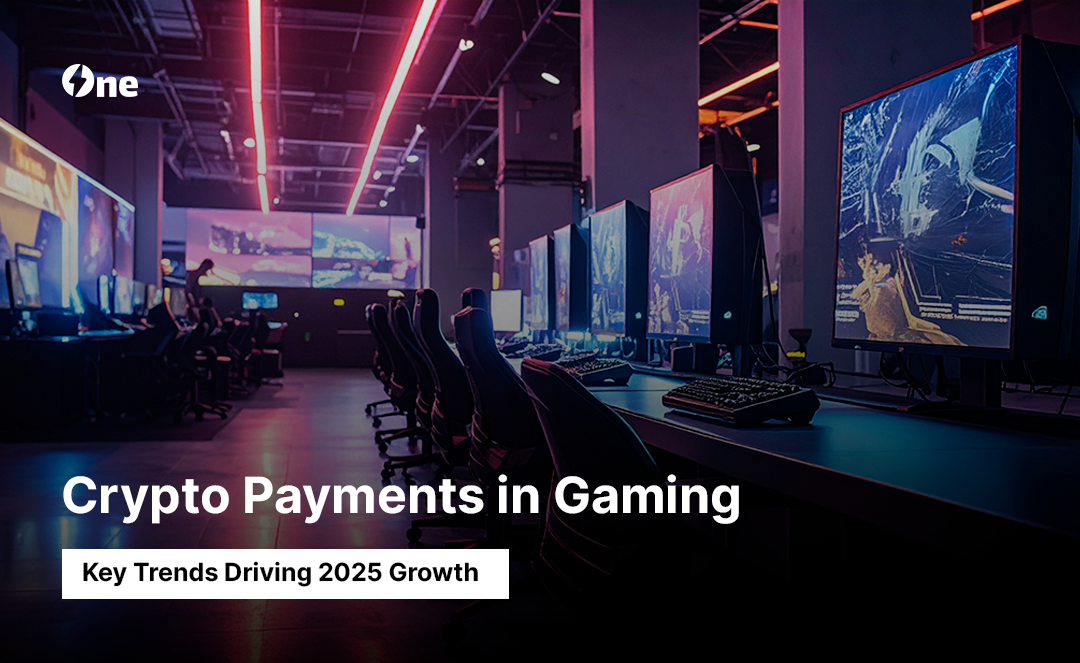
  • Crypto Payments in Gaming: Key Trends Driving 2025 Growth

    Crypto Payments in Gaming: Key Trends Driving 2025 Growth

    In the rapidly evolving gaming industry, where player trust and transaction speed are everything, crypto payments have gone from niche to necessity.

    By 2025, blockchain-powered transactions are no longer just a novelty for early adopters, they’ve become a core infrastructure for gaming operators competing on payout speed, regulatory compliance, and user experience.

    The global gaming market, valued at over $95 billion in 2024, is projected to surpass $130 billion by 2028, driven largely by crypto integration and digital payment innovations.

    Here’s how the convergence of blockchain, stablecoins, and smart compliance frameworks is reshaping the future of gaming payments  and why platforms like AIO are setting a new standard for speed, transparency, and trust.


    The Rise of Crypto in Gaming

    Historically, gaming transactions have been dominated by traditional payment rails like bank transfers, cards, and e-wallets, each burdened by slow settlement times, chargeback risks, and high fees.

    Crypto payments solved all three:

    • Instant deposits and withdrawals
    • No chargebacks
    • Global accessibility without banking intermediaries

    In 2025, more than 60% of global gaming platforms offer crypto as a payment option, according to data from H2GC.

    Players no longer see crypto as experimental. They see it as faster, safer, and more private.

    Key Trends Defining 2025

    A. Stablecoins Become the New Default

    Volatility was once the biggest barrier to crypto adoption in gaming. That’s why 2025 marks the year stablecoins (like USDT, USDC, and EUROC) dominate deposit and withdrawal flows.

    They offer the benefits of blockchain (speed, transparency) without exposure to price swings which are ideal for operators managing liquidity and for players looking for predictable value.

    AIO integrates stablecoin support across EVM and TRON chains among others, allowing operators to handle settlements at fees as low as 0.3-0.5% compared to the 2-3% charged by legacy PSPs.

    B. Quick Top-ups and Instant Withdrawals as Differentiators

    Players expect real-time payouts, and blockchain finally makes that possible.

    Crypto payments clear instantly, even on weekends or holidays, a game-changer in a 24/7 industry.

    According to SOFTSWISS 2025 data, crypto payout speed is now one of the top 3 drivers of player loyalty.

    AIO’s batch processing system lets operators approve, verify, and execute multiple pay-ins (top-ups) in a single transaction, reducing gas fees by up to 90%.

    C. Compliance Gets Smarter, Not Stricter

    Regulation is no longer a deterrent; it’s a competitive advantage.

    Jurisdictions like Malta, Curaçao, and Estonia now issue licenses that explicitly support crypto payment operators, provided they integrate KYC, AML, and data protection frameworks.

    That is why the platforms of choice are compliance-first with protocols embedded natively, giving gaming operators regulatory confidence while scaling globally.

    D. Tokenized Rewards and Loyalty

    Beyond payments, blockchain is now powering player engagement systems.

    Operators are introducing on-chain loyalty tokens that reward users for gameplay, deposits, or referrals which are tradable or redeemable across partner sites.

    This builds community stickiness and extends lifetime player value, blending DeFi incentives with traditional gaming economics.

    E. Affiliate Payments Made Easy

    The gaming affiliate ecosystem is massive and notoriously complex when it comes to payouts.

    Blockchain simplifies that by enabling programmable, multi-party payments: one transaction can automatically route affiliate commissions globally, with full traceability.

    AIO’s API allows operators to automate affiliate settlements directly from the dashboard: transparent, auditable, and gas-optimized.

    Regional Adoption Hotspots

    Europe

    • Malta and Estonia remain blockchain licensing leaders.
    • Operators use stablecoin gateways to manage fiat conversion risks.

    Asia

    • Strong adoption in Philippines, Japan, South Korea, and Singapore, where players are highly mobile-first.
    • Stablecoin gaming volumes surged 120% YoY (Q2 2024–Q2 2025).

    Latin America

    • Crypto adoption accelerated by inflation and limited card infrastructure.
    • Stablecoin payments are increasingly used in Brazil, Argentina, and Mexico for deposits and withdrawals.

    Middle East

    • Emerging markets like the UAE and Bahrain are opening to regulated crypto gaming under fintech sandboxes.

    The Economics of Blockchain Payments

    MetricTraditional PSPsAIO
    Settlement Speed1-3 daysSeconds
    Transaction Fees2-3%0.3-0.5%
    Chargeback RiskHighNone
    Payout ScalabilityManual, multi-stepAutomated, batch-based
    Compliance CoverageFragmentedGDPR + PCI-DSS + KYC + AML
    Gas FeesStandardUp to 90% savings (batch transfer)

    For operators processing millions in monthly volume, the difference is transformative not just in margins, but in player experience.

    The Next Frontier: Interoperability and AI in Gaming Payments

    2025 also marks the start of multi-chain interoperability in gaming as operators want flexibility to transact across multiple blockchains seamlessly.

    AI is also entering payment optimization, analyzing player transaction behavior to detect anomalies, predict payout volume, and even adjust gas batch timing for optimal cost-efficiency.

    AIO’s system architecture already integrates smart routing logic, enabling operators to process thousands of payments in real time without human intervention.

    Why AIO Is Becoming the Backbone of Gaming Payments

    The AIO platform is purpose-built for high-volume, compliance-heavy sectors like gaming.

    Here’s what sets it apart:

    • Speed: Near-instant deposit and payout processing
    • Savings: Up to 80% lower platform fees and 90% lower gas costs
    • Support: 24/7 live developer support, not ticket queues

    AIO is already processing hundreds of millions in gaming payments, proving that blockchain infrastructure can outperform legacy PSPs in speed, transparency, and trust.

    The Executive Takeaway

    For gaming executives, the future is clear:

    The next wave of growth won’t come from marketing gimmicks, it will come from faster, cheaper, and compliant transactions that keep players engaged and regulators satisfied.

    The gaming platforms winning in 2025 are those who can move money without friction, anywhere, anytime, and blockchain is making that possible.

    Discover how the All-In-One solution helps gaming operators move money faster, safer, and cheaper.

    Is your platform ready for millions of players who use crypto? Go all in with AIO!

  • Cross-Border Payments 2025: Why the G20’s 2027 Target Is Under Threat

    Cross-Border Payments 2025: Why the G20’s 2027 Target Is Under Threat

    In 2020, the G20 and Financial Stability Board (FSB) set an ambitious goal: to make cross-border payments cheaper, faster, more transparent, and universally accessible by 2027.

    But five years later, the global finance community is realizing a hard truth: that target is slipping away.

    Despite trillions in daily transactions and decades of innovation in fintech, the average international payment in 2025 still costs over 6% in fees and takes two to five business days to settle. That’s not just an inconvenience; it’s a structural inefficiency that drains global productivity and disproportionately impacts SMEs and developing economies.

    As regulators, central banks, and payment providers scramble to find solutions, one clear alternative continues to gain traction: blockchain-powered cross-border payments.

    The G20’s Vision and Why It’s Falling Behind

    When the G20 set its 2027 targets, it defined clear metrics:

    • Speed: 75% of cross-border payments should settle within one hour.
    • Cost: The average cost should drop below 1% of transaction value.
    • Transparency: Full visibility of fees, FX rates, and delivery times.
    • Access: Inclusive coverage, even in emerging markets.

    But the latest FSB progress report (2025) admits that few of these goals are on track.

    Why Is That?

    1. Legacy infrastructure inertia: Banks still rely on SWIFT, which wasn’t built for real-time operations.
    2. Fragmented regulation: Different compliance and data regimes across jurisdictions.
    3. High intermediary costs: Correspondent banking networks charge layers of fees.
    4. Currency conversion friction: FX spreads often exceed official rates.

    The irony is that while policymakers debate standardization, the blockchain industry is already delivering the results they’re aiming for.

    The Blockchain Advantage in Cross-Border Payments

    Blockchain eliminates intermediaries by enabling peer-to-peer value transfer across global networks.

    The result: instant settlement, transparent fees, and significant cost reductions.

    According to a 2025 Deloitte survey, 64% of global CFOs now view blockchain-based rails as “strategically essential” for treasury modernization.

    Key Advantages for Enterprises

    • Settlement Speed: Seconds instead of days
    • Cost Efficiency: 0.3-0.5% fees versus 2-6% via legacy rails
    • Transparency: Immutable records, real-time tracking
    • Programmability: Smart contracts automate compliance, auditing, and reporting

    For companies transacting millions in B2B or remittances, these gains translate into millions in annual savings and liquidity improvements.

    The $150B Opportunity Gap

    The World Bank estimates that global remittances alone exceed $700 billion annually, yet average fees remain above 6%.

    Reducing those costs to 1% (the G20 target) would unlock $150 billion annually for end recipients,  a transformative figure for emerging markets.

    Blockchain rails are already proving they can close that gap.

    Example:

    A European Gaming platform paying Asian affiliates through the All-In-One blockchain payment system can:

    • Settle in under 90 seconds
    • Pay minimal platform fees
    • Avoid correspondent banks entirely

    That’s not theoretical, it’s operational today.

    Regulatory Bottlenecks: The Real Barrier

    The technology exists. The challenge is regulatory interoperability.

    • Data privacy laws (like GDPR) complicate transaction transparency.
    • AML/KYC standards differ across jurisdictions.
    • Licensing frameworks vary between fintech-friendly and protectionist economies.

    However, markets like Singapore, UAE, and the EU are showing how balanced regulation can enable innovation:

    • Singapore’s MAS launched “Project Guardian” for blockchain asset tokenization.
    • EU’s MiCA regulation (effective 2025) gives stablecoins and payment tokens legal certainty.
    • Bahrain’s sandbox program fast-tracks cross-border payment pilots.

    This trend points to a future where compliance is not a barrier, but a bridge for blockchain adoption.

    How Enterprises Are Preparing for the Transition

    Forward-thinking enterprises aren’t waiting for the G20’s 2027 finish line. They’re already transitioning to blockchain payment infrastructure in 2025.

    Common strategies include:

    1. Hybrid settlement systems: Combining fiat rails with blockchain backbones for redundancy.
    2. Stablecoin settlements: Using regulated tokens (like USDC or EUROC) for real-time payments.
    3. Cross-chain interoperability: Integrating EVM-compatible networks for flexibility and reach.
    4. Compliance integration: Automated KYC, AML, and reporting through smart contracts.

    This approach allows CFOs and COOs to test blockchain at scale without operational risk.

    What the Future Holds: Interoperability & CBDCs

    The long-term solution may involve CBDCs (Central Bank Digital Currencies) interoperating with private blockchain networks.

    The Bank for International Settlements (BIS) is already piloting cross-border CBDC frameworks across Asia, Europe, and the Middle East.

    The goal: universal, 24/7 settlement across currencies and jurisdictions. Something that blockchain-native platforms like AIO are already enabling today.

    AIO’s Role in the New Cross-Border Standard

    AIO’s all-in-one platform is built for the very outcomes the G20 envisioned:

    • Instant global settlements (seconds, not days)
    • Low-cost transactions (only 0.3-0.5%)
    • Multi-chain support (EVM, TRON, BTC, LTC, etc.)

    By processing over $500M+ in blockchain payments across industries like gaming, e-commerce, and fintech, AIO proves that blockchain doesn’t need to wait for 2027 as it’s delivering results in 2025.

    The Executive Takeaway

    The G20’s vision for better cross-border payments isn’t failing, it is simply being outpaced by blockchain.

    Enterprises that act now can:

    • Cut transaction costs by 70-80%
    • Improve liquidity and cash flow
    • Eliminate multi-day settlement risks
    • Expand globally without banking friction

    Don’t wait for 2027. The future of cross-border payments is already here and it’s powered by blockchain.

    Learn how the AIO platform enables instant, secure, and cost-effective settlements worldwide. Integrate your business now with AIO.

  • Why 2025 Is the Year of Stablecoins in Enterprise Payments

    Why 2025 Is the Year of Stablecoins in Enterprise Payments

    Over the past decade, blockchain has transformed from a niche innovation into a global financial infrastructure. But 2025 marks a more focused evolution, the mainstream rise of stablecoins as a practical, compliant, and enterprise-ready payment instrument.

    Stablecoins, digital currencies pegged to stable assets like the U.S. dollar or euro, have matured from crypto market tools into foundations for cross-border payments, settlements, and cash management. With clearer regulations, robust audit mechanisms, and new tokenized cash frameworks emerging across major economies, businesses are starting to recognize what the crypto community has long known:

    Stablecoins aren’t just about convenience. They’re about speed, predictability, and control.

    The Shift from Fiat Friction to Blockchain Efficiency

    Traditional payment systems, especially for cross-border transactions, rely on multi-tier intermediaries such as correspondent banks, clearinghouses, and FX brokers. With each adding latency, cost, and risk.

    Average international B2B payments can take 2-5 business days to settle and cost 2-3% in fees. For large enterprises, that translates into millions of dollars in avoidable costs annually.

    On the other hand, stablecoins settle in seconds, carry fees measured in basis points, and provide transparent, auditable records in real time.

    By 2025, stablecoins have evolved from speculative instruments into liquid, regulated digital cash with enterprise-grade infrastructure to back them.

    The Rise of Regulatory Clarity

    Until recently, stablecoins existed in a gray zone between digital assets and electronic money. That uncertainty kept many enterprises on the sidelines. But regulators worldwide have since recognized their potential and the necessity of proper frameworks.

    Europe: MiCA (Markets in Crypto-Assets) Regulation

    • Effective 2025, MiCA gives legal certainty to fiat-backed stablecoins (so-called “e-money tokens”).
    • Companies like Circle (issuer of USDC) are registering under MiCA’s e-money license requirements.
    • This opens the door for institutional adoption across the EU under a unified framework.

    United States

    • The U.S. Congress has advanced the Clarity for Payment Stablecoins Act, emphasizing 1:1 reserve backing and audit transparency.
    • Payment giants like PayPal have already entered the space with PYUSD, signaling a shift from experimentation to implementation.

    Asia and the Middle East

    • Singapore and the UAE lead with sandbox-friendly licensing regimes.
    • Central banks in Japan, Hong Kong, and Bahrain are testing tokenized bank deposits and stablecoin settlement for interbank clearing.

    The takeaway: compliance risk is no longer a dealbreaker, it’s a competitive advantage for early adopters.

    Why CFOs Are Paying Attention

    Enterprise finance teams care about three things: liquidity, predictability, and compliance. Stablecoins deliver on all three with added efficiency.

    Key advantages for enterprises:

    • Reduced transaction costs (0.3-0.5% vs. 2-3% via cards or SWIFT)
    • Instant settlement and reconciliation
    • Multi-currency support without FX exposure
    • Programmable payouts (for vendors, affiliates, or partners)

    In gaming, ecommerce, and cross-border logistics, where daily payment volume can reach tens of millions, these savings scale exponentially.

    From Speculation to Settlement: Real-World Use Cases

    Cross-Border Settlements

    A Singapore-based supplier can now receive USDC within 30 seconds from a client in London. No need for SWIFT intermediaries, no FX slippage, and no waiting for bank hours.

    Payroll & Freelance Payments

    Enterprises can automate global payroll in stablecoins, removing the 3-5 day delay common in remittance corridors like Southeast Asia and Africa.

    Merchant Payments & E-Commerce

    E-commerce platforms increasingly accept stablecoin payments via embedded wallets, unlocking real-time settlement while reducing chargeback risk.

    B2B Treasury Operations

    CFOs now use stablecoins as an on-chain working capital layer, holding reserves in tokenized dollars or euros to move funds instantly between subsidiaries.

    Challenges: What Still Needs to Be Solved

    Despite rapid growth, enterprises still face hurdles:

    • Regulatory fragmentation between regions.
    • Counterparty risk for non-transparent issuers.
    • Accounting complexity for on-chain holdings.
    • On/off-ramp costs when converting to fiat.

    But these are diminishing as stablecoin infrastructure professionalizes and audits become standardized.

    The Future: Tokenized Cash & Deposit Tokens

    The next evolution isn’t just about stablecoins issued by private firms, it’s about tokenized deposits issued by regulated banks.

    Central banks in India, Japan, and the EU are already piloting deposit tokenization, combining blockchain efficiency with the safety of commercial bank money.

    Stablecoins may have been the gateway; tokenized deposits could be the endgame, a hybrid between crypto innovation and traditional trust.

    Why AIO Is Positioned at the Center of This Shift

    We developed AIO (All-in-one) around three pillars that perfectly align with this evolution:

    1. Speed & Savings:

      AIO enables cross-border stablecoin payments with 0.3 – 0.5% platform fees, compared to 2-3% with legacy processors.
    2. Security:

      With AES, Two Factor Authentication, IP Whitelisting, and Automated Fraud Detection built-in, we make sure all transactions are safe and legitimate.
    3. Scalability:

      Batch transfers, multi-chain support (EVM, TRON, BTC, LTC, etc.), and stablecoin settlement for hundreds of tokens.

    With over $500M processed, AIO is already proving how blockchain-native infrastructure can outperform legacy rails not in theory, but in execution.

    The Executive Takeaway

    2025 is the inflection point where blockchain payments stop being futuristic and start being the standard.

    Stablecoins are no longer “crypto;” they’re the new cash layer for global business.

    Executives who adopt early will enjoy faster cash cycles, lower costs, and global agility that traditional systems can’t match.

    Ready to modernize your payment infrastructure?

    See how the AIO platform enables enterprise-ready blockchain payments across industries. Modernize your business now with AIO.